This site uses cookies. By continuing to browse the site you are agreeing to our use of cookies. Read our privacy policy>

This site uses cookies. By continuing to browse the site you are agreeing to our use of cookies. Read our privacy policy>
Enterprise products, solutions & services
[Shanghai, China, September 19, 2025] At the Huawei Global Electric Power Summit held during HUAWEI CONNECT 2025, Huawei released the Global Digitalization and Intelligence Index (GDII) Report for the Power Industry. This report aims to provide quantitative evaluation tools and strategic guidance in the construction of future power systems for global power companies as they go digital.
Jo Cops, Chairman of the International Electrotechnical Commission (IEC), stated in his opening speech that with the widespread adoption of PV systems, electric vehicle charging piles, and microgrids, real-time operational monitoring of low-voltage grids has become crucial for ensuring the stability of power systems.
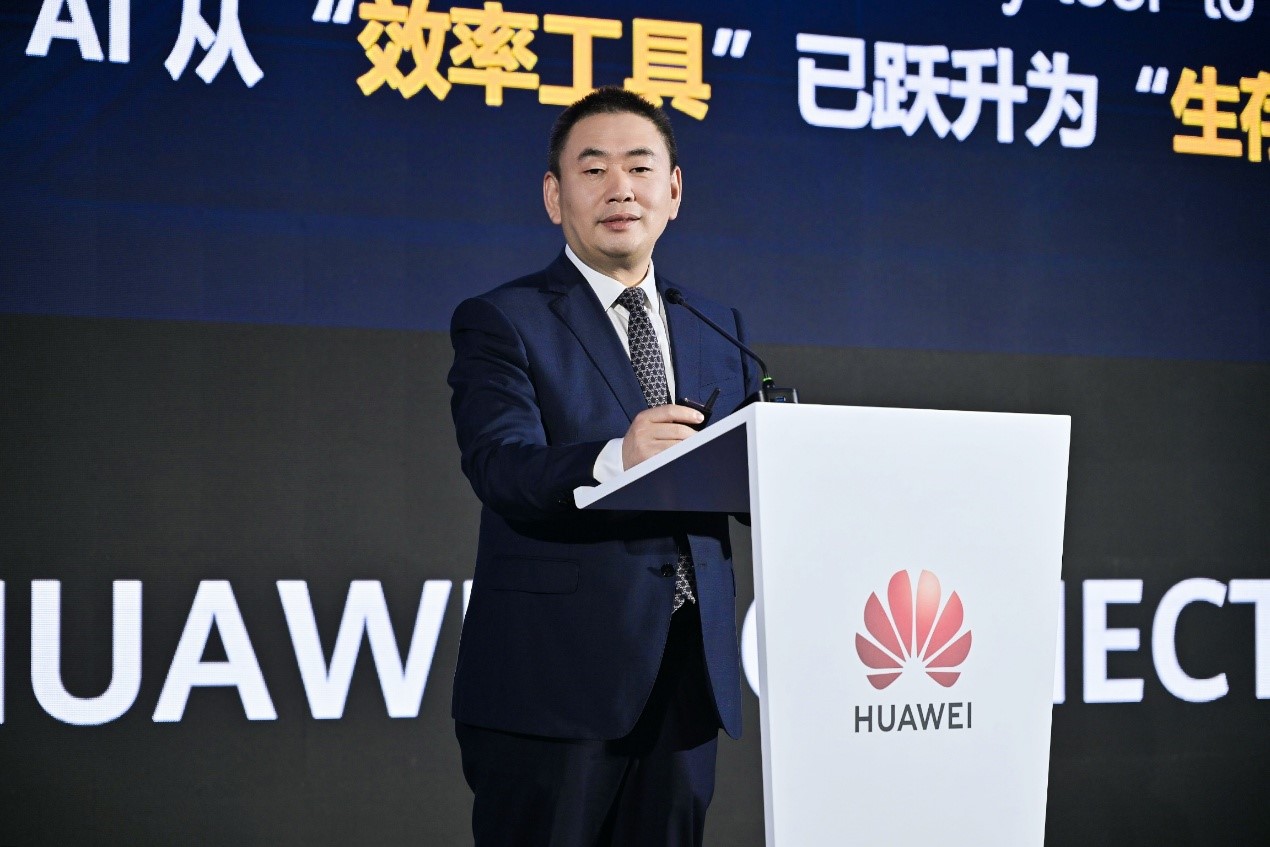
David Sun, CEO of Huawei's Electric Power Digitalization BU
David Sun, CEO of Huawei's Electric Power Digitalization BU, emphasized in his speech that digital and intelligent enablement is vital to addressing the uncertainties of the future power system. AI has been elevated from an "efficiency tool" to a "survival essential," powered by high-quality, real-time data and underpinned by highly reliable communication networks.
Amid the global energy transition and increasing technological innovations, the primary goal of the future power system is to strike a balance between ultimate stability and ultimate flexibility. It's for this purpose that Huawei released the Electric Power GDII Report. Driven by the target communication network architecture and guided by the principles of "intelligent and robust main network, medium-voltage integration, low-voltage transparency, high speed and security, and space-ground integration," Huawei has constructed a multi-layered technical system based on "scenario applications + cloud-pipe-edge-device synergy." The system aims to provide power companies with intelligent solutions covering all scenarios of power generation, transmission, distribution, and consumption, so they can achieve digital transformation and sustainable development.
At the summit, Huawei and State Grid Shaanxi jointly released the 2025 Global Electric Power Showcase. In Shaanxi, through joint innovation and large-scale verification, the two companies achieved transparency in low-voltage 400V transformer districts, delivering real-time perception, centralized management and regulation, and quick response for the management of low-voltage distributed new energy.
Charles Tlouane, COO of City Power from South Africa, and Simon Dezsö, Deputy CEO of Hungary's MAVIR, also shared their challenges and first-hand experiences as their companies went digital.
The rapid development of AI, as well as digital and communication technologies, provides the technical foundation for addressing the key challenges of the future power system. Looking ahead, Huawei will deepen the application of digital and intelligent technologies in the power sector, injecting intelligence into core electric power production scenarios. We will remain committed to helping global power companies tackle systemic challenges in power systems and move towards a smarter and more sustainable future.
Copyright © 2026 Huawei Technologies Co., Ltd. All rights reserved.