
Srinakharinwirot University: Transforming Student Experience with Huawei FTTO
Building a Foundation for Smart Campus Excellence Through Fiber Innovation
Este sitio utiliza cookies. Si continúa navegando en este sitio, acepta nuestro uso de cookies. Lea nuestra política de privacidad>

Productos, soluciones y servicios empresariales

Building a Foundation for Smart Campus Excellence Through Fiber Innovation
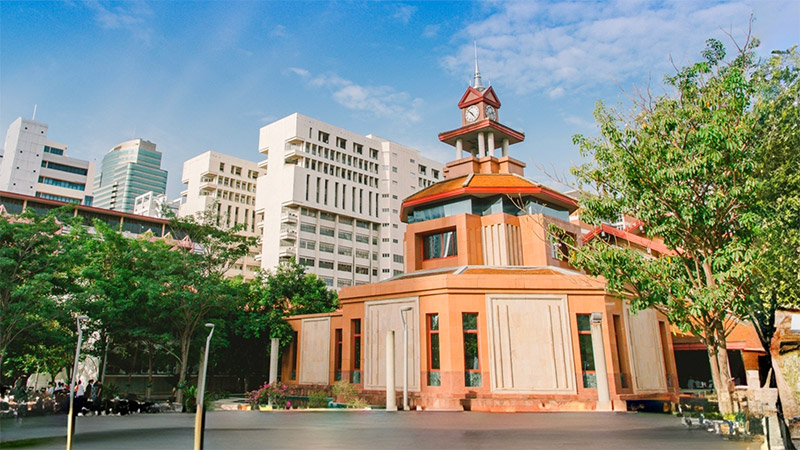
Founded in 1949, Srinakharinwirot University holds a distinguished position as Thailand's first institution of higher education dedicated exclusively to teacher training. Today, with more than 25,000 students across 17 faculties and 4 colleges distributed between the Prasarnmit campus in downtown Bangkok and the Ongkharak campus northeast of the city, SWU has evolved into a comprehensive university committed to producing well-rounded citizens who contribute meaningfully to Thailand's development.
To achieve its vision of becoming an Innovative University, SWU leadership recognized the need for comprehensive ICT infrastructure transformation. The existing network suffered from insufficient bandwidth, lacked centralized identity management, had outdated monitoring systems, and provided unstable wireless coverage that did not reach all areas. In partnership with Huawei, SWU embarked on a campus-wide digital transformation that included upgrading the core network with high-speed switches delivering 20x bandwidth increases, deploying comprehensive Wi-Fi coverage enhanced by intelligent network management system, and implementing advanced applications including VR classrooms and AI-powered campus security systems.
However, a critical gap remained in student dormitories, where connectivity limitations prevented students from fully accessing the digital learning resources essential to their academic success.
Despite substantial campus-wide network improvements, student dormitories presented unique connectivity challenges that standard corridor-based Wi-Fi deployment could not adequately address.
Access Points installed in central corridors suffered from severe wall attenuation, causing signal strength to degrade dramatically inside dormitory rooms. This made it difficult or impossible for students to participate in online classes, submit assignments, or access digital learning resources from their living spaces. The legacy copper LAN cabling was approaching end-of-life, with deteriorating performance and limited bandwidth capacity unable to meet modern educational demands.
Students in rooms farther from corridor APs experienced dramatically inferior connectivity compared to those in more favorable locations, creating an unfair learning environment. The existing infrastructure couldn't support increasing bandwidth requirements for emerging technologies and applications essential to the university's digital transformation goals. For a university committed to creating a comprehensive Digital Learning Ecosystem and developing digital talent for Thailand, these connectivity challenges represented fundamental barriers to educational equity and institutional excellence.
As part of the comprehensive campus transformation, SWU selected Huawei's FTTO solution to fundamentally transform the dormitory network architecture. Rather than attempting incremental improvements to corridor-based Wi-Fi, the university made a strategic decision to bring fiber-optic connectivity directly to every student room.
The Fiber to the Office/Room approach aligned perfectly with SWU's mission to build an inclusive, high-performance IT infrastructure. Fiber-optic cables provide virtually limitless bandwidth, ensuring the network can support not just today's needs but future technologies like Wi-Fi 7, cloud computing, and big data analytics without requiring cable replacement. The smaller diameter of fiber cables simplified installation through existing cable pathways, reducing construction complexity and cost compared to traditional copper upgrades. Most importantly, speed upgrades can be achieved through equipment changes alone, protecting the university's infrastructure investment for decades to come.
Huawei's Passive Optical Network architecture proved ideal for the dormitory environment. By minimizing active equipment in the distribution path, the PON design delivers superior reliability with fewer active components meaning fewer potential failure points and dramatically reduced network downtime. Centralized management and passive splitting equipment in the distribution network reduce operational complexity and support costs, while seamless integration with the campus-wide intelligent network management system enables unified network orchestration across all buildings. The Optical Network Units deployed in each room feature advanced Wi-Fi capabilities engineered to handle multiple concurrent device connections, perfect for the modern student environment.
The success of SWU's FTTO deployment reflected not just technical excellence but exceptional partnership between the university and Huawei's team. Throughout the project lifecycle, Huawei provided comprehensive support including expert network design that balanced performance, cost, and future expandability while integrating seamlessly with existing campus infrastructure. Specialized technical teams managed the physical deployment and system configuration, ensuring minimal disruption to student life during the transition. On-site expertise enabled quick troubleshooting and resolution of any issues, keeping the project on schedule. Comprehensive training equipped SWU's IT staff to manage and optimize the new infrastructure independently. The result was a smooth transition from legacy infrastructure to cutting-edge fiber connectivity, completed without significant service interruptions to students.
The FTTO deployment completed SWU's transformation into a truly comprehensive Digital Learning Ecosystem, fundamentally improving the student living and learning experience. The complete elimination of Wi-Fi dead zones and connectivity dropouts now provides consistent, stable internet access from every dormitory room, ensuring all students enjoy equal access to digital learning resources, online classes, and submission systems regardless of room location.
Student feedback has been exceptionally positive, with residents now able to seamlessly participate in online learning, stream educational content, and complete coursework without connectivity interruptions. The passive optical architecture and centralized control have reduced long-term maintenance costs and simplified network management, while perfectly aligning with SWU's Smart University strategy to establish the foundation for future innovation in cloud computing, IoT, and advanced analytics.
The dormitory FTTO deployment represents an important milestone in SWU's ongoing network transformation journey. Over the next 3-5 years, the university has ambitious plans to expand FTTO infrastructure to additional academic buildings, administrative offices, and research facilities across the entire campus. The fiber backbone will support Wi-Fi 7 deployment, enabling multi-gigabit wireless speeds and ultra-low latency applications, while providing the bandwidth capacity necessary for big data analytics, artificial intelligence research, and high-performance cloud computing initiatives. The goal is to create a fully connected intelligent campus network that seamlessly integrates academic, administrative, and student services systems. By establishing this fiber-optic foundation today, SWU is positioning itself to lead Thailand's higher education sector in digital innovation for decades to come.
Srinakharinwirot University's FTTO deployment exemplifies how strategic infrastructure investment can transform institutional capability. By partnering with Huawei to bring fiber connectivity directly to student rooms, SWU has not only solved immediate connectivity challenges but has established a platform for continuous innovation in digital education.
The project demonstrates that building a Smart University requires more than incremental improvements—it demands bold infrastructure decisions that create lasting value. Through fiber-to-the-room architecture, passive optical networking, and comprehensive partnership support, SWU has secured a competitive advantage in delivering world-class digital education experiences.
As SWU expands this foundation across campus in the coming years, the university will be well-positioned to embrace emerging technologies and pedagogical innovations that shape the future of higher education in Thailand.
Copyright © 2026 Huawei Technologies Co., Ltd. Todos los derechos reservados.

