
Building China's Largest Intelligent Computing Platform for SJTU
ผลิตภัณฑ์ โซลูชั่น และบริการสำหรับองค์กรธุรกิจ

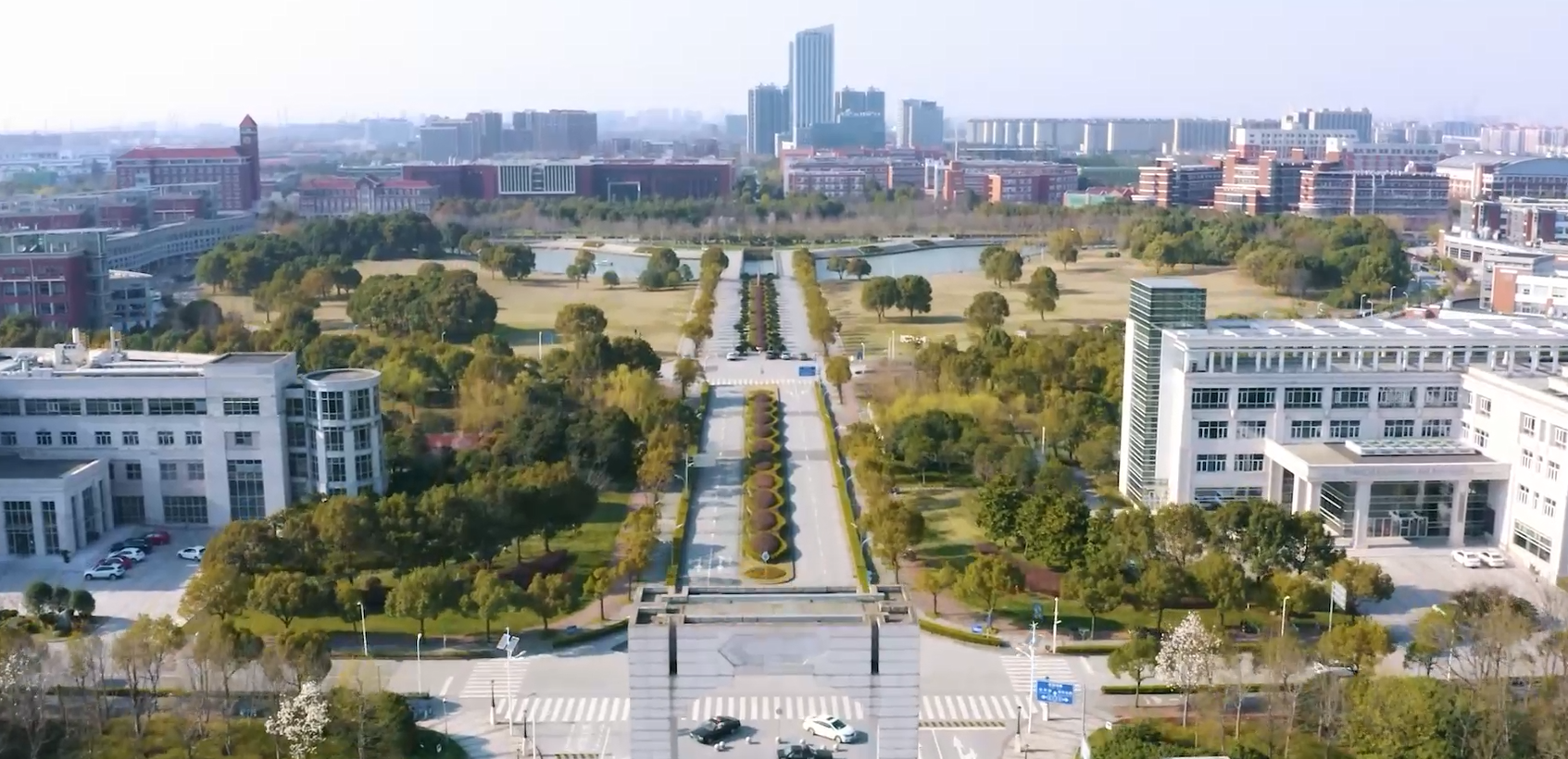
Shanghai Jiao Tong University (SJTU) is one of China's oldest and most prestigious universities, with a history dating back to 1896 when it was founded as Nanyang Public School. After 130 years of academic pursuits, SJTU has become a first-class, internationally renowned university that is comprehensive, innovative, and international.
AI has become China's national strategy. Driven by the "AI+" wave, universities are becoming important bases for AI technological innovation and talent cultivation. SJTU in particular has launched the Ten AI Policies, focusing on programs like AI Discipline Advancement, AI for Science Seed Program, AI Action Plan, Smart Liberal Arts, and AI for Engineering.
Zhiyuan-1: China's largest intelligent computing platform for universities
The global education industry is adopting innovative ICTs such as AI and big data at an increasing scale and depth. These latest advancements help drive teaching innovation and improve the efficiency and quality of talent cultivation. Traditional theoretical teaching models can no longer meet the market demand of versatile professionals. AI-powered training emerges as the bridge that connects theory with practice.
SJTU has 40 schools and affiliated departments, 13 affiliated hospitals, 13 research agencies, 77 undergraduate programs, and 50,000 students. When SJTU launched the Ten AI Policies, they encountered a number of challenges during implementation. The first challenge SJTU faced was the stark increase in demand for computing power. The university's scientific research computing platform covers most disciplines. Among these disciplines, more than 500 courses have completed AI transformation. This kept the utilization rate of the university's computing platform above 90% for years, approaching saturation.
In 2025, SJTU worked with ecosystem partners to build Zhiyuan-1, an intelligent computing platform. Integrating hardware and software facilities, such as Ascend AI, Kunpeng servers, and the ModelArts AI development platform, as well as partners' technical expertise, Zhiyuan-1 has become China's largest intelligent computing platform for universities, boasting 633 PetaFLOPS of computing power and 13 PB of storage capacity. Since its launch in December 2024, Zhiyuan-1 has completed the local deployment and cloud-based application of thousand-card Ascend clusters. This enabled efficient data and computing power transfer, effectively supporting the training of foundation models with hundreds of billions of parameters. To further lower the threshold for using computing power and make computing resources more accessible, SJTU integrated Zhiyuan-1 into its HPC platform. This enables the efficient and intensive provisioning of computing power, addressing many of the typical disadvantages of university computing facilities. The platform now provides one-stop services such as computing power application, task management, and account access, and out-of-the-box AI application services for teachers and students. These services cover scientific research, practical teaching, and classroom experiments, turning AI computing into another campus resource as important as water, electricity, and gas. It's safe to say that Zhiyuan-1 has become a super computing power factory for SJTU.
To meet increasingly complex, diversified, and refined educational and scientific research needs, SJTU upgraded and optimized its computing, storage, and network capabilities based on scenario-specific applications, aiming to achieve faster computing, more economic storage, and better ICT resource utilization.
SJTU required cutting-edge technology to build efficient and secure high-performance storage centers and computing clusters. They also needed to integrate the software ecosystem to centrally schedule data and manage computing power. A visualized and simplified O&M system was required to improve system availability.
New directions for digital and intelligent upgrade, focusing on storage and computing transformation
SJTU planned to restructure its existing IT support system, splitting the once mixed computing infrastructure into two parallel systems: the storage resource pool and computing resource pool.
Against this backdrop, SJTU introduced Huawei's AI Cloud Platform and Scientific Research Computing Solution to support advanced data storage with a converged, layered, and partitioned design. The university also upgraded its hardware environment and computing power resources, ensuring smooth data interconnection and efficient computing power transfer without affecting each other.
On the AI cloud platform, SJTU manages large-scale Ascend computing clusters, enabling the high-concurrency training of clusters with thousands of cards, and the stable and reliable training of foundation models with hundreds of billions of parameters. Leveraging Huawei Cloud ModelArts, an integrated R&D platform for model training, testing, and deployment, SJTU has achieved industry-leading linear training performance for clusters with thousands of cards. This is down to the platform's leading technical architecture and algorithm design, as well as extensive model training and optimization capabilities. In addition, the platform supports quick recovery from cluster faults and automatic recovery of AI jobs, laying a solid basis for in-depth foundational research on the underlying architecture of next-generation AI and interdisciplinary application research.
In terms of computing hardware resources, SJTU built a high-performance computing foundation using Kunpeng ARM high-performance processors and deployed Ascend AI training servers to form a heterogeneous and converged computing architecture. In addition, SJTU integrated various processor resources, such as CPUs, NPUs, and FPGAs, and introduced intelligent scheduling algorithms to monitor the load of each node. Computing power is dynamically allocated based on the computing characteristics of application scenarios, ensuring efficient utilization of computing power resources.
In terms of storage hardware resources, SJTU meticulously planned and deployed high-performance and high-capacity distributed storage clusters based on Huawei OceanStor Pacific Distributed Storage to meet the high-speed access requirements of massive amounts of data of various types. Differentiated storage policies were designed for data characteristics in different service scenarios, such as teaching courseware, scientific research experiment data, and language learning materials. Frequently accessed hot data is stored in the high-speed cache layer to achieve a response within milliseconds. Cold data is stored in large-capacity and cost-effective media to optimize the overall storage cost.
AI-powered innovation and development for century-old universities
Huawei's scientific research computing solution has helped SJTU advance its high-performance computing (HPC) platform to a new level. The solution efficiently deploys the DeepSeek model, achieving performance breakthroughs in high-concurrency scenarios, cost-effective deployment of foundation model inference, and significant improvements in energy efficiency. This gives effective support to SJTU's daily teaching, scientific research, and management. To make full use of the computing platform, SJTU established a dedicated computing service team with nearly 30 core members, forming the SJTU model of computing services. The team uses a new model known as "computing + X" to support scientific research and campus management, building a new intelligent framework powered by AI.
In AI-assisted scientific research, SJTU built a heterogeneous HPC foundation to support high-level development of science, engineering, medicine, liberal arts, and other disciplines.
In AI-assisted management and services, SJTU developed an intelligent O&M system based on Huawei's campus network intelligent twins and the DeepSeek model, transforming network operations, administration, and maintenance (OAM) services from IT-based to intelligence-assisted. With this progress, SJTU won the first prize in the autonomous network track of the IPv6 Technology Application Innovation Competition, setting a benchmark of campus network construction for universities across the globe. SJTU's proprietary apps, such as My SJTU and Digital Employee, provide online services, AI voice interaction, and are adapted to HarmonyOS, serving as mobile service centers. Intelligent campus governance is steadily advancing, providing more convenient and efficient services for teachers and students.
In AI-assisted programming, the system provides instant feedback on potential issues while students are inputting code, reducing time taken to debug. In knowledge Q&A, the system can quickly understand users' questions and intent, and accurately extract relevant information from the knowledge base to provide answers. In AI-assisted paper reading, the system uses advanced natural language processing technology and a text mining algorithm to quickly parse academic papers and generate abstracts.
Xi Lifeng, Executive Vice President of SJTU, said, "Looking ahead, SJTU will continue to deepen strategic cooperation with Huawei to build a sustainable, self-evolving, and world-class AI application ecosystem to explore collaborative innovation in scenarios such as AI+ teaching, scientific research, and management. Together with industry partners like Huawei, SJTU will embark on a new journey, achieve excellence through continuous accumulation, and draw a new blueprint for digital and intelligent transformation in higher education."
Copyright © 2026 Huawei Technologies Co., Ltd. All rights reserved.

