

China West Airport Group Shapes the Future Aviation Hub with AI
Produkty, Rozwiązania i usługi dla przedsiębiorstw

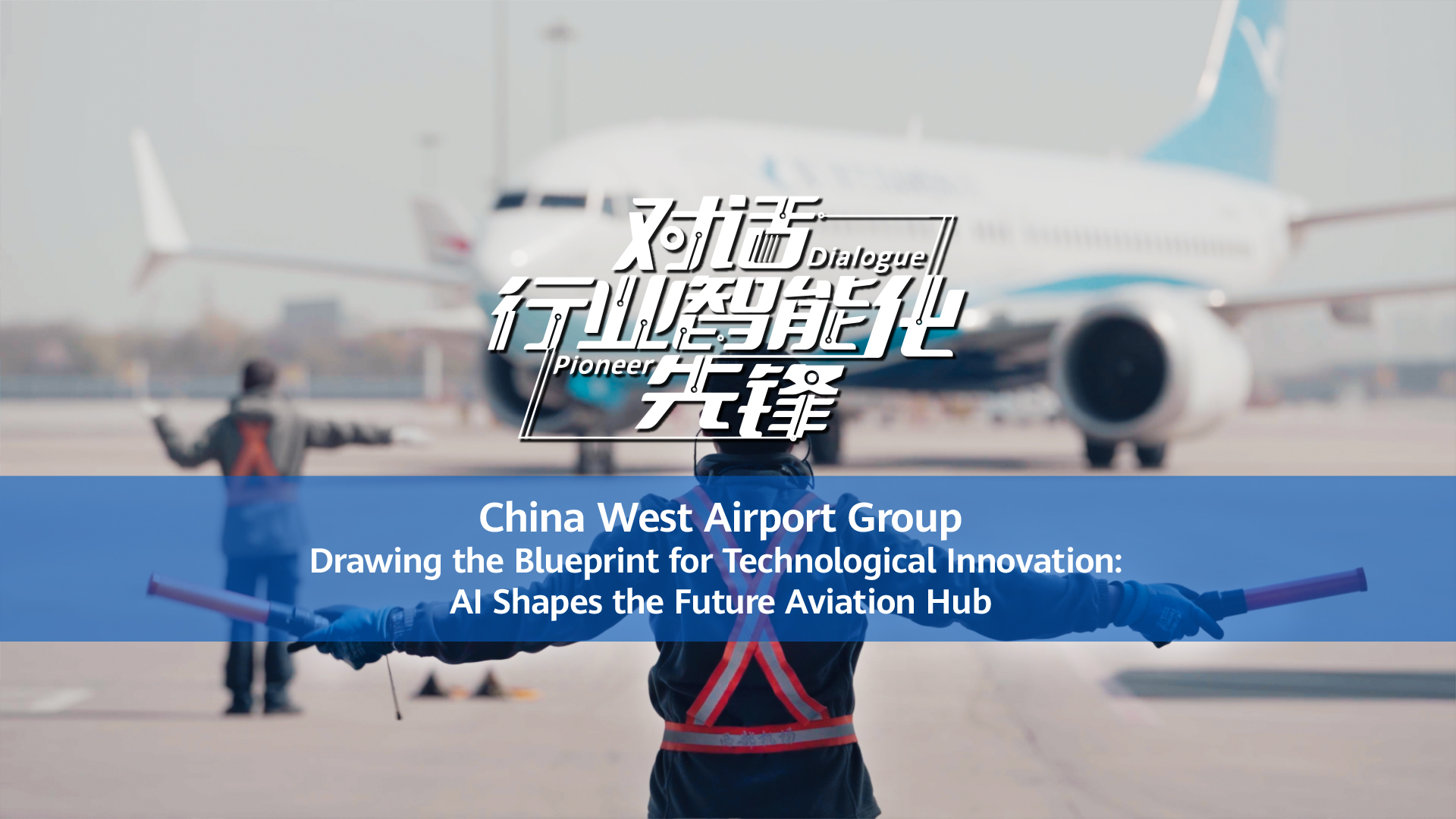
Xi'an, a world-famous cultural capital with a history spanning thousands of years, is undergoing profound transformation brought by technological innovation. The new Terminal 5 at Xi'an Xianyang International Airport, equipped with cutting-edge technologies, has turned the airport into a powerhouse, a catalyst for new growth in the region.
Founded in 2008, China West Airport Group (CWAG) is now the second largest airport management group in China. The group manages 18 airports in the provinces of Shaanxi, Ningxia, and Qinghai, forming an airport cluster with Xi'an Xianyang International Airport as the core, Yinchuan Hedong International Airport and Xining Caojiapu International Airport as the two wings, and 12 regional airports and 3 general airports as support. CWAG's airports and traffic both account for more than 70% of the total volume in Northwest China.
CWAG is dedicated to becoming a top-tier, influential airport management group worldwide and a leading airport cluster in China. It strives to deliver air transport services that are connected, comprehensive, high-quality, and distinctive, and have significant influence in the Belt and Road Initiative (BRI) and core competitiveness in China.
During the third phase of the Xi'an Xianyang International Airport project, CWAG worked with Huawei to explore paths of intelligent transformation, and created the 4A concept—business architecture (BA), data architecture (DA), application architecture (AA), and technical architecture (TA). CWAG thoroughly assessed the airport's current services, and set up a dedicated committee to manage architectures and standards. This ensured that the project followed all regulations and stayed consistent.
Building a digital and intelligent foundation for comprehensive data governance
To support intelligent development, CWAG built an industry-leading digital and intelligent foundation based on the cloud platform. This foundation has three features:
• Reliability: CWAG was the first in the industry to use the active-active architecture of cloud services, ensuring cloud-based service systems performed uninterrupted.
• Security: The project achieved cloud-network-security synergy.
• Intelligence: High-performance computing power and efficient AI platforms provide strong support for intelligent transformation of services.
Based on the digital and intelligent foundation, CWAG migrated all of its core systems to the cloud. During the third phase of its development, the Xi'an Xianyang International Airport migrated more than 60 systems to the cloud to improve system reliability and simplify O&M. In addition, the airport deployed more than 100P computing power to support over 35 AI algorithms and applications, laying the groundwork for intelligent transformation. The cloud architecture and experience gained during the project were then replicated and used at member airports, such as Yinchuan Hedong International Airport and Xining Caojiapu International Airport, culminating in a unified one-cloud, multi-pool platform with cohesive architecture and O&M.
High-quality data is the prerequisite for intelligent development. Based on its daily services, CWAG established a group-wide data management system and operational process specifications. The unified data standards cover more than 20,000 business fields across the entire group, ensuring data consistency and accuracy. In addition, the group built an AI data center to aggregate and manage data from more than 50 systems in Xi'an Xianyang International Airport, and implemented comprehensive data governance to ensure smooth data flow between systems. CWAG also developed more than 36 analysis topics and 500 indicators to extensively explore the value of data, providing data support for more than 30 service applications. This effectively improved the group's operational efficiency and service quality, improving passenger experiences.
Industry's first holistic airport management platform: Physical and digital airports coexist and grow together
During the third phase of the Xi'an Xianyang International Airport project, CWAG built a digital airport and strategized to let the physical and digital airports co-evolve.
This brought the airport three new features:
First, panoramic perception. CWAG eliminated information silos by aggregating data from various service systems, and visualizing the dynamic data of flights, passengers, baggage, and transportation in real time.
Second, asset visualization. CWAG achieved transparent management of assets, such as devices and pipelines, by integrating the data of the phase one and phase two projects, and connecting all asset management systems.
Third, simulation and prediction. In the digital space, CWAG can simulate scenarios like flight transfers and extreme weather, assisting service decision-making.
As an airport that practices holistic airport management, CWAG uses the new platform to coordinate the operations of the airfield, terminal area, and public area. The platform integrates various data, supports the airport to shift from single-point efficiency improvement to overall quality optimization, and achieves a comprehensive balance between operations, safety, services, and benefits.
Boosting transformation and innovation with the digital and intelligent foundation
"With the completion of the third phase of the project, we can guarantee a flight punctuality rate exceeding 93% even amidst increasingly complex operational demands," Chen Yu, General Manager of the Operations Control Center, Xi'an Xianyang International Airport Co., Ltd, said. "This is a 3 pp improvement over the previous level. The aircraft ground command system also has new functions, such as path planning, runway conflict warning, and simultaneous pushback. Operational data of the past six months suggests that the system shortened the average ground operational time by 1.3 minutes, achieving new records in energy saving, emission reduction, and efficiency improvement."
By promoting intelligent development, the Xi'an Xianyang International Airport has significantly improved its operational efficiency, safety, and service quality.
• More efficient operations: The system can accurately predict the estimated time of arrival and docking, with an industry-leading 93% accuracy rate 30 minutes in advance. With the digital command system in place, the digital tower reduces investment required by 20%, improves system scalability, eliminates blind spots in command, and delivers a better working environment.
• Intelligent incident prevention and security control: Digital twin applications such as smart runway, FOD, and perimeter intelligent monitoring accurately identify security anomalies and prevent incidents in the airfield.
• High-quality services: The entire passenger service process, including check-in, waiting, transfer, transportation, and shopping, is now available online, providing passengers with accurate and personalized services.
Through the three phases of smart airport construction, the Xi'an Xianyang International Airport has achieved its goals of ensured safety and reliability, precise node control, efficient flight dispatch, and optimal service experiences. In this process, Huawei provided a full-stack digital and intelligent foundation, as well as consulting and planning services, and worked with partners to assist the airport in cloud migration, data utilization, and intelligent transformation. Xu Zhiyu, Vice President of Huawei Smart Transportation BU, said, "Based on years of experience in digital and intelligent transformation, Huawei provided consulting and planning services to help Xi'an Xianyang International Airport complete two integrations—integrating airport services with cloud and big data foundations, and project planning with technology implementation."
CWAG's intelligent transformation journey provides valuable insights for the industry.
• Strategic guidance: Elevate intelligence to the strategic level of the group, and clearly define the vision and path.
• Architecture first: Implement coordinated planning of services, data, applications, and technologies through the 4A concept.
• Solid foundation: Build a reliable, secure, and intelligent digital and intelligent foundation as the basis for transformation.
• Data-driven: Unlock data value and enable service innovation through comprehensive data governance.
• Scenario-specific: Address real-world pain points and create quantifiable value based on specific service scenarios.
• Shared success: Extensively collaborate with technology enterprises and aggregate industry ecosystem resources to accelerate innovation implementation.
For traditional industries, transformation is no longer optional, but a must. CWAG's project building a digital and intelligent foundation to overhaul the Xi'an Xianyang International Airport set a new benchmark for the civil aviation sector, and offered a scalable model for intelligent transformation replication across other industries as well. By continuously integrating emerging technologies like AI and foundation models into its service systems, CWAG is working with its partners to jointly draw a blueprint for technological innovation, reshaping aviation hubs with intelligence, and forging a brighter digital and intelligent future.
Note: All data in this document originates from China West Airport Group.
Copyright © 2026 Huawei Technologies Co., Ltd. Wszystkie prawa zastrzeżone.

