
Huawei's Xinghe AI Ultra-Resilient Fabric Accelerates CTM's Digital Transformation

Macao in China is driving urban digital transformation through cutting-edge communications technologies, setting a benchmark for global digital city development. As the leading integrated telecommunications service provider in Macao, CTM has achieved 100% 5G penetration among users and, in July 2024, became one of the first operators worldwide to launch commercial 5.5G services. This milestone firmly positions Macao among the pioneers of 5.5G commercialization, laying a strong network foundation for smart city initiatives.
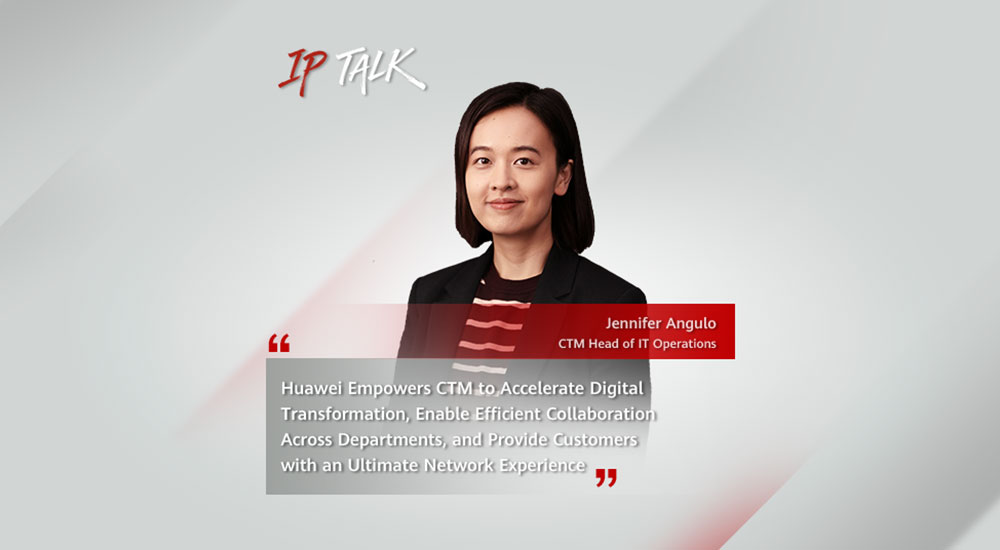
CTM is evolving from a traditional telecommunications operator into a smart city builder. Guided by the vision of "AI Macao", CTM is relentlessly developing integrated digital service capabilities across cloud, network, intelligence, and security. In this way, it is empowering governments, enterprises, and people's lives with AI, IoT, and other advanced technologies. Yet, as digitalization ramps up, the limits of legacy network architectures are surfacing as the key obstacle on the path to transformation.
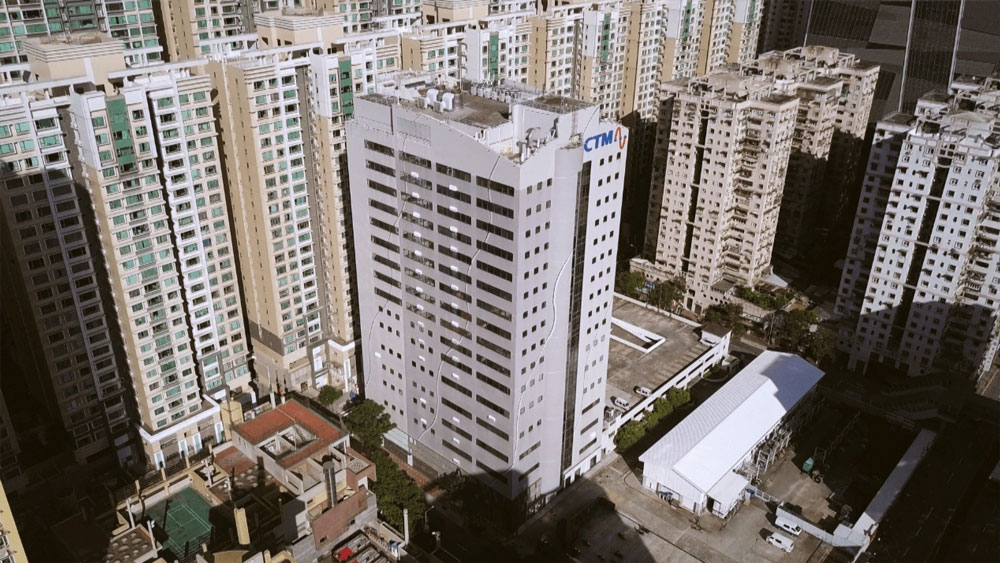
As its business scale expands and application of AI intensifies, CTM is expected to enhance its capabilities beyond traditional network architectures.
The core challenges were concentrated in three areas:
• Traditional operations and maintenance (O&M): With conventional device-centric configuration models, there was a lack of unified management and insufficient end-to-end visibility across the network. New service rollouts relied heavily on manual configuration and verification, resulting in cumbersome and time-consuming processes. This not only placed a heavy burden on O&M teams but also increased the risk of configuration errors, while disaster recovery (DR) drills remained difficult to conduct on a regular basis.
• Architectural equipment retirement: The legacy network adopted traditional data center architectures that lacked flexibility and failed to support emerging IT technologies such as virtualization and cloud computing. Worse still, core switches had reached end of service (EoS), with both performance and security deteriorating. Stable service operations and future evolution were at serious risk.
• Limited scalability: Traditional architectures struggled to support bandwidth-hungry, high-concurrency services such as AI, with weak network scalability easily leading to congestions. Compounding the problem, the lack of robust fault-protection mechanisms resulted in a high risk of service interruptions. As such, it was impossible to ensure 24/7 uninterrupted services.
After a meticulous selection process, CTM ultimately chose Huawei's Xinghe AI Ultra-Resilient Fabric Solution to address its transformation challenges. Centered on AI-enabled design, full-stack reliability, and smooth evolution, this solution fully upgrades the network foundation across automation, reliability, and compatibility to support continued business growth and sustained innovation.
The following are the solution's standout features:
• Intelligent O&M for greater efficiency
Powered by the StarryWing Digital Map and the iMaster NCE-Fabric intelligent controller, the solution delivers end-to-end visibility of the topology, traffic, and faults—breaking down management silos. With network automation, configurations can be delivered end-to-end with a single click. Combined with pre-event simulation and post-event verification technologies, this ensures zero configuration errors. An exclusive three-level rollback mechanism (service, tenant, and network levels) enables precise and rapid rollback when a fault occurs, significantly shortening service restoration time. For CTM, new service rollout cycles are reduced by 60%, while O&M workload decreases by 50%, eliminating the inefficiency and risks of manual operations.
• Rock-solid resilience for uninterrupted services
Leveraging Huawei's Rock-Solid Architecture, the solution builds a three-layer protection system across the network, devices, and links. It adopts Multichassis Link Aggregation Group (M-LAG) technology to enable hitless device upgrades with no service interruptions, eliminating the need for cross-department coordination of upgrade windows. Thanks to the AI Eagle-Eye engine, the solution identifies unknown faults within seconds and automatically performs switchovers, ensuring 24/7 service stability. For CTM, this perfectly supports high-reliability scenarios where uninterrupted availability is critical.
• Seamless compatibility for future elastic scalability
Integral to the solution, the CloudEngine 8865-4C high-performance switch—the industry's first device to support full-rate (from GE to 400GE) flexible line cards—was deployed. With five types of cards and seven selectable rates, it delivers industry-leading flexibility to adapt to current bandwidth needs while evolving toward future AI and cloud computing demands. The solution also supports seamless integration with existing networks, enabling unified management across heterogeneous environments. This avoids fragmented multi-vendor O&M, ensures smooth service switchover during upgrades, and protects existing investments.
By deploying Huawei's Xinghe AI Ultra-Resilient Fabric Solution, CTM has successfully overcome the bottlenecks of traditional networks and established a highly resilient, scalable data center network foundation for the AI era. This has delivered tangible benefits, including unified visibility across the entire infrastructure, intelligent and efficient O&M, and 24/7 service stability.
Through this collaboration, CTM is fast-tracking its transformation into an integrated digital service provider while advancing the "AI Macao" vision. On top of that, CTM is leveraging cutting-edge network technologies to drive Macao's smart city development and foster deeper integration between the digital and real economies.
Looking ahead, Huawei will continue to deepen its expertise in data center networking. Together with more partners, it will harness the power of innovative technologies and solutions to explore new paths of digital transformation and unlock opportunities in the intelligent era.
Copyright © 2026 Huawei Technologies Co., Ltd. Všechna práva vyhrazena.

