Produits, solutions et services pour les entreprises
Akıllı Telefonlar, Bilgisayar&Tabletler, Giyilebilirler ve Daha Fazlası
[Barcelona, Spain, March 3, 2026] During MWC Barcelona 2026, Huawei released a series of innovative products and solutions centered on AI Data Centers (AI DCs) at its AI DC Innovation Session. These include the Huawei AI Data Platform and the upgraded Xinghe AI Fabric 2.0 Solution, all designed to accelerate enterprises' intelligent transformation. The Session, themed "Leading AI DC Innovation, Winning the Intelligent Future," brought together industry leaders and experts to discuss trends in AI DC development and share construction best practices.
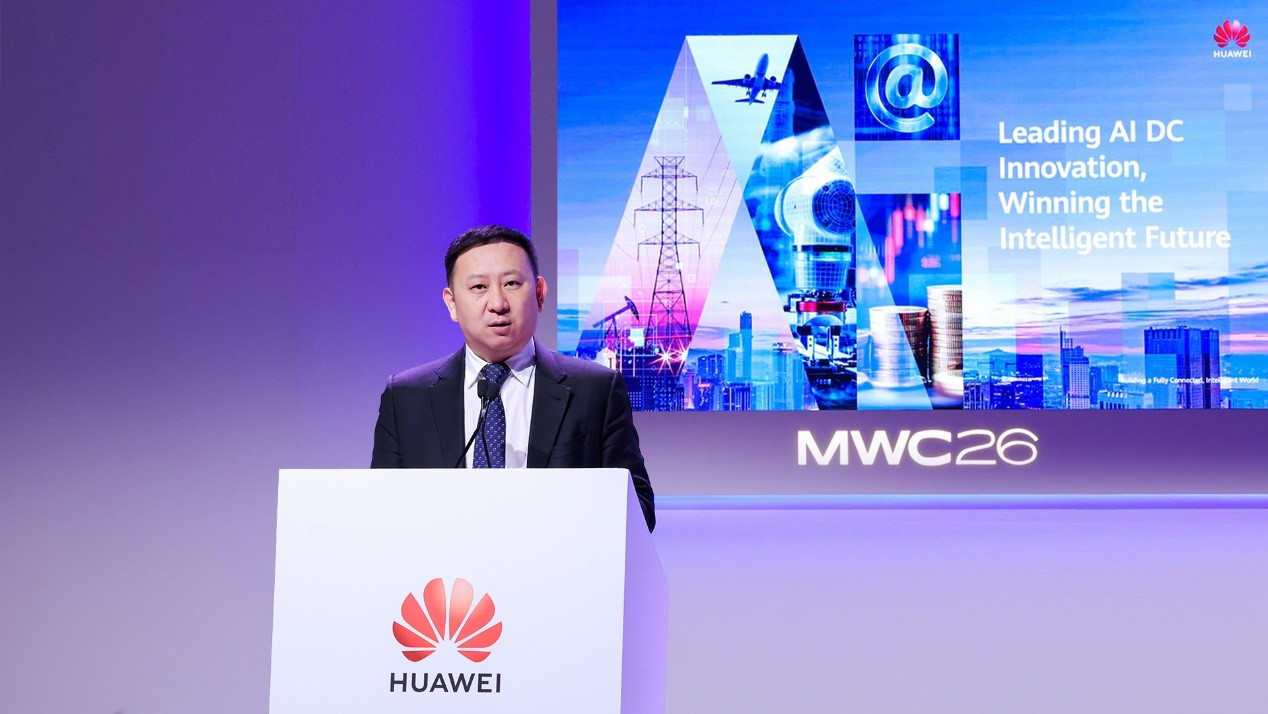
Michael Ma, presenting his speech
Michael Ma, Vice President of Huawei and President of ICT Product Portfolio Mgmt & Solution, highlighted that the focus of AI is shifting from models to agents. AI DCs are the productivity engines of the intelligent era and put pressure on computing efficiency, data-AI collaboration, and facility architecture. He said that Huawei has created an end-to-end AI DC solution that synergizes computing, storage, networking, AI platforms, large models, and data center facilities. Through technology convergence and innovation, this solution offers the world an open-architecture, efficient, and sustainable new option.
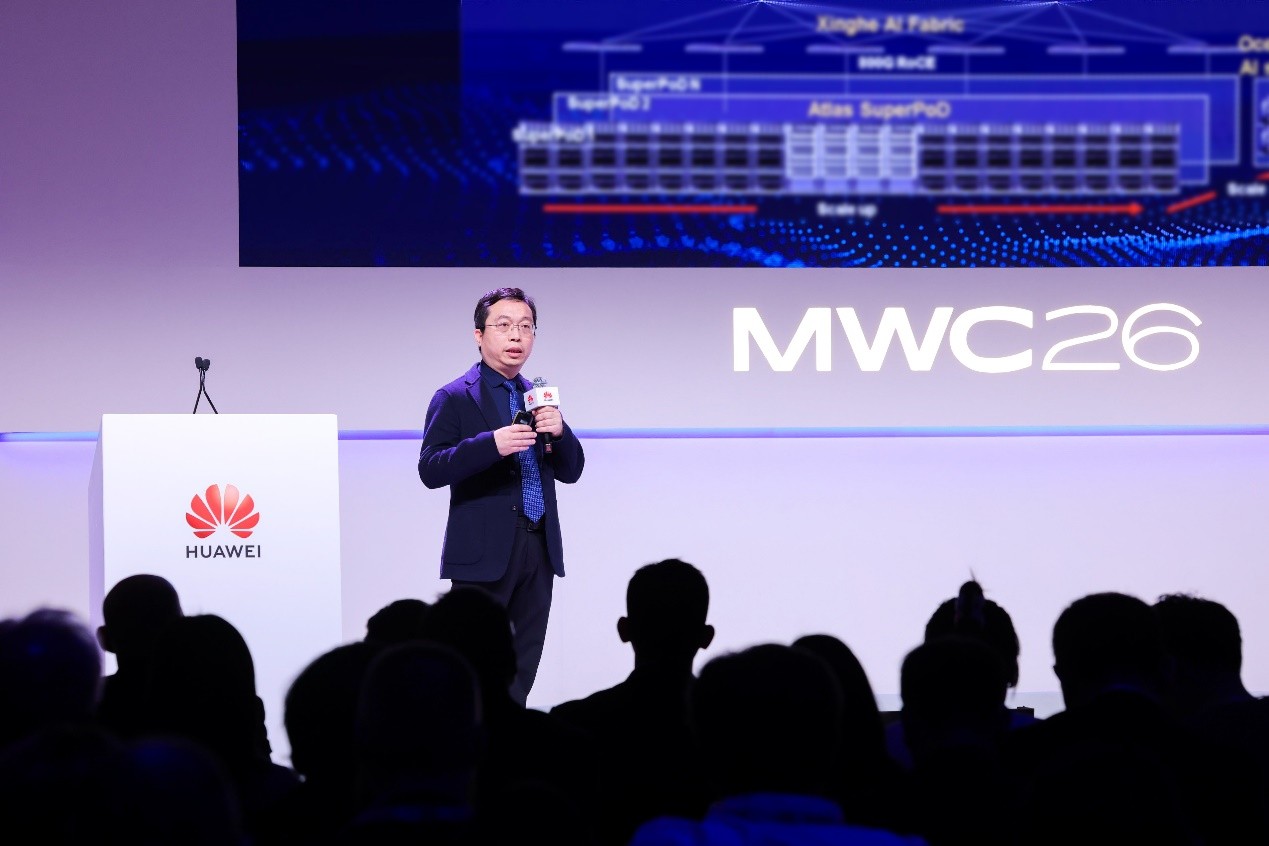
Justin Ju, delivering his speech
Justin Ju, CEO of Huawei Data Center Team delivered a speech on "Leading AI DC Innovation, Winning the Intelligent Future." He noted that AI is transitioning from a supporting application to a core production application, and that enterprise AI adoption is increasingly characterized by two trends: agentic AI with diversified models, and industry-specific post-training. Growing AI applications drive a massive demand for compute resources. According to Ju, enterprises must build computing infrastructure capable of supporting tenfold or even hundredfold growth in advance to meet growing service requirements. He said that Huawei focuses on ICT convergence and innovation, and has developed an AI DC infrastructure solution pillared on five key technologies: SuperPoDs, compute-network synergy, compute-storage synergy, compute-cloud synergy, and compute-management synergy. This solution lays a solid computing foundation for global enterprises, offering a new choice for the world.
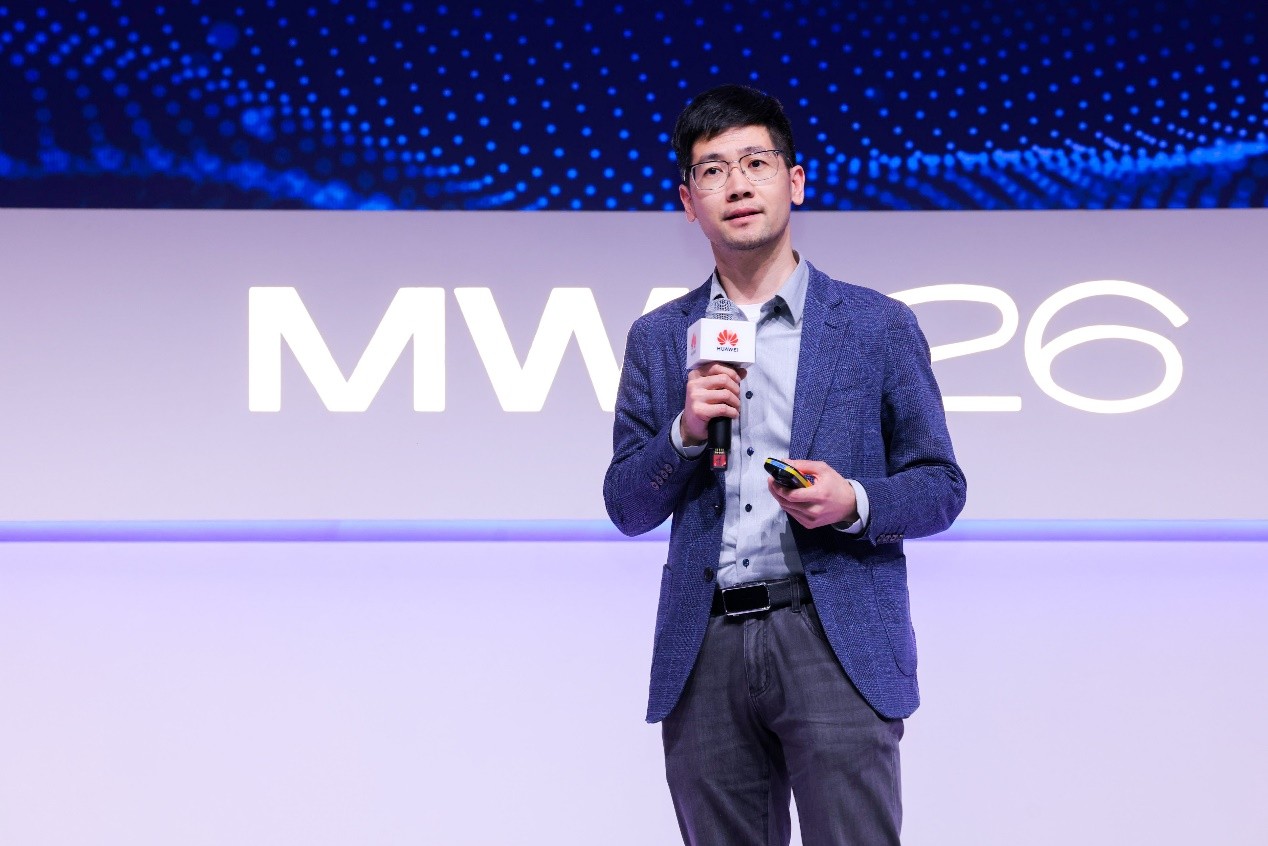
Xie Liming, presenting his speech
At the Session, Xie Liming, President of Flash Storage Domain at Huawei Data Storage Product Line, announced the release of the Huawei AI Data Platform. The platform integrates three key technologies: knowledge generation and retrieval, memory extraction and recall, and inference acceleration powered by the Unified Cache Manager (UCM). It empowers enterprise AI agents to overcome the long-standing challenges of inefficient knowledge use, poor memory, and slow inference. This will accelerate the implementation of intelligent applications.
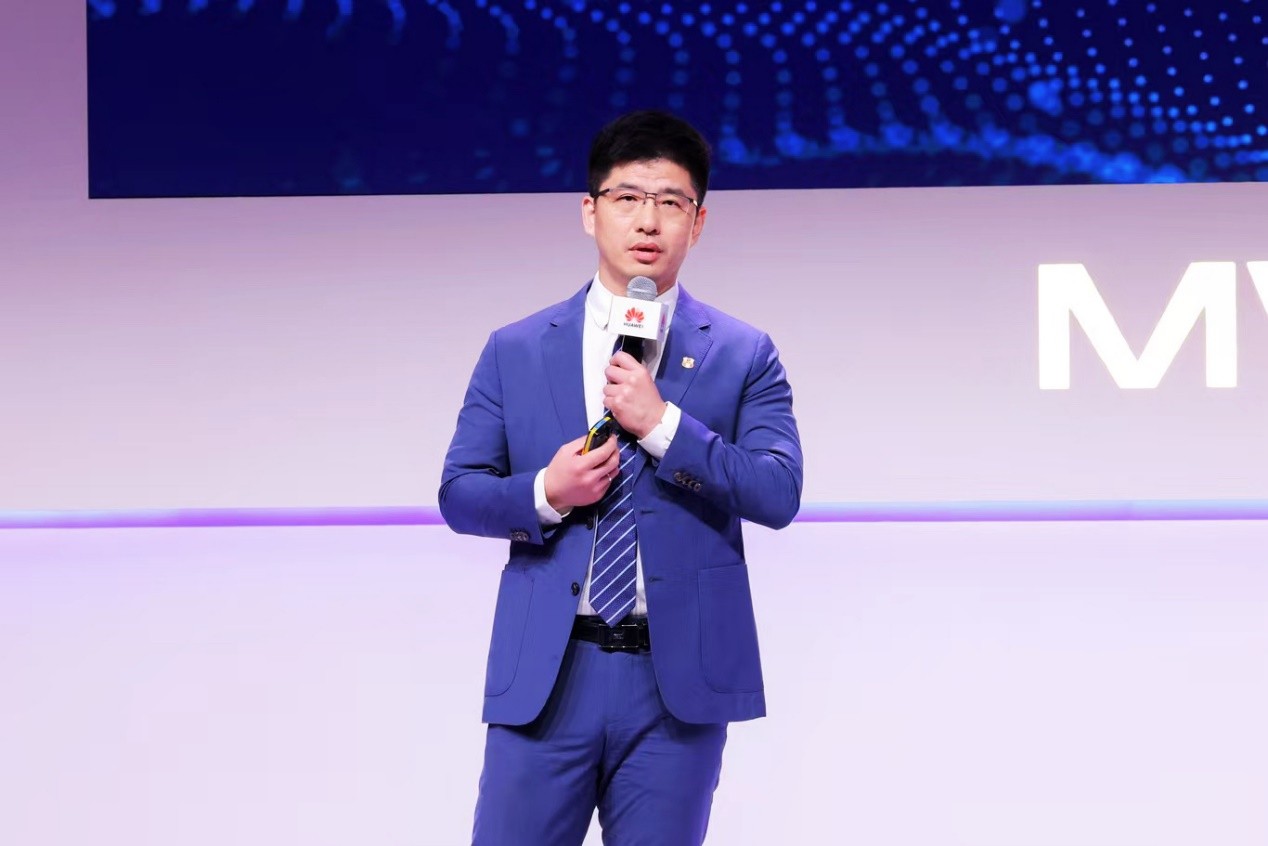
Arthur Wang, delivering his speech
Arthur Wang, President of the Data Center Network Domain at Huawei Data Communication Product Line, stated that data center networks have rapidly advanced from predominantly virtualization and cloud to a new stage of AI. Over the past year, the focus of AI has shifted from foundational model training to agentic AI applications, with enterprise priorities now centering on fully unleashing and efficiently utilizing AI computing power. The newly released Xinghe AI Fabric 2.0 is a complete upgrade from the previous AI Fabric solution introduced in 2018. It builds on a three-layer network architecture of AI Brain, AI Connectivity, and AI Network Elements, and integrates four core capabilities:
• Rock-Solid Architecture 2.0 that ensures three levels of high reliability with the AI Eagle-Eye Engine
• StarryWing Digital Map 2.0 that delivers three levels of automation with NetMaster
• Xinghuan AI Turbo 2.0 that offers Network Packet Load Balancing (NPLB) and Network Stream Load Balancing (NSLB) capabilities
• iFlashboot 2.0 that enables ultra-fast reboots within 5 seconds
Together, these innovations empower enterprises to build always-on AI agentic data center networks with full computing power.
In addition, Huawei and a partner also announced a new Scenario Driven Foundation Model Solution, which is designed for building and developing high-quality AI DCs.
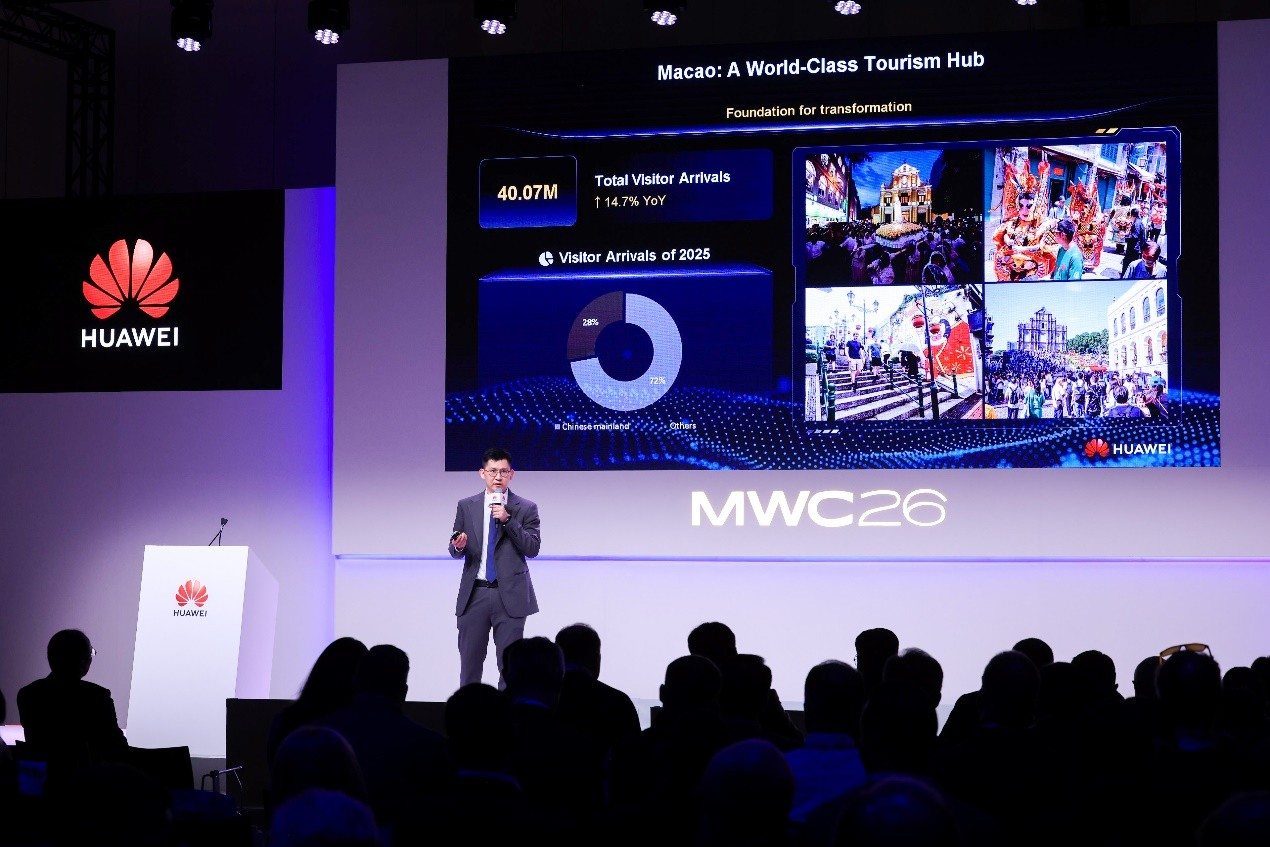
Chan, Chou Weng Raphael, speaking at the Session
Chan, Chou Weng Raphael, Deputy Director of Macao SAR Economic and Technological Development Bureau (DSEDT), introduced how AI DCs support Macao's intelligent transformation. The world-class tourism hub is transitioning from a tourism-dependent economy to a "1+4" model for a moderately diversified economy. Harnessing its unique strengths in a small scale, dense population, and extensive use cases, Macao is using AI DCs to fuel digital innovation and upgrades in key sectors such as tourism, technology, education, and public services. Chan said that Macao will continue to integrate AI deeper into application scenarios to catalyze economic growth and regional development.
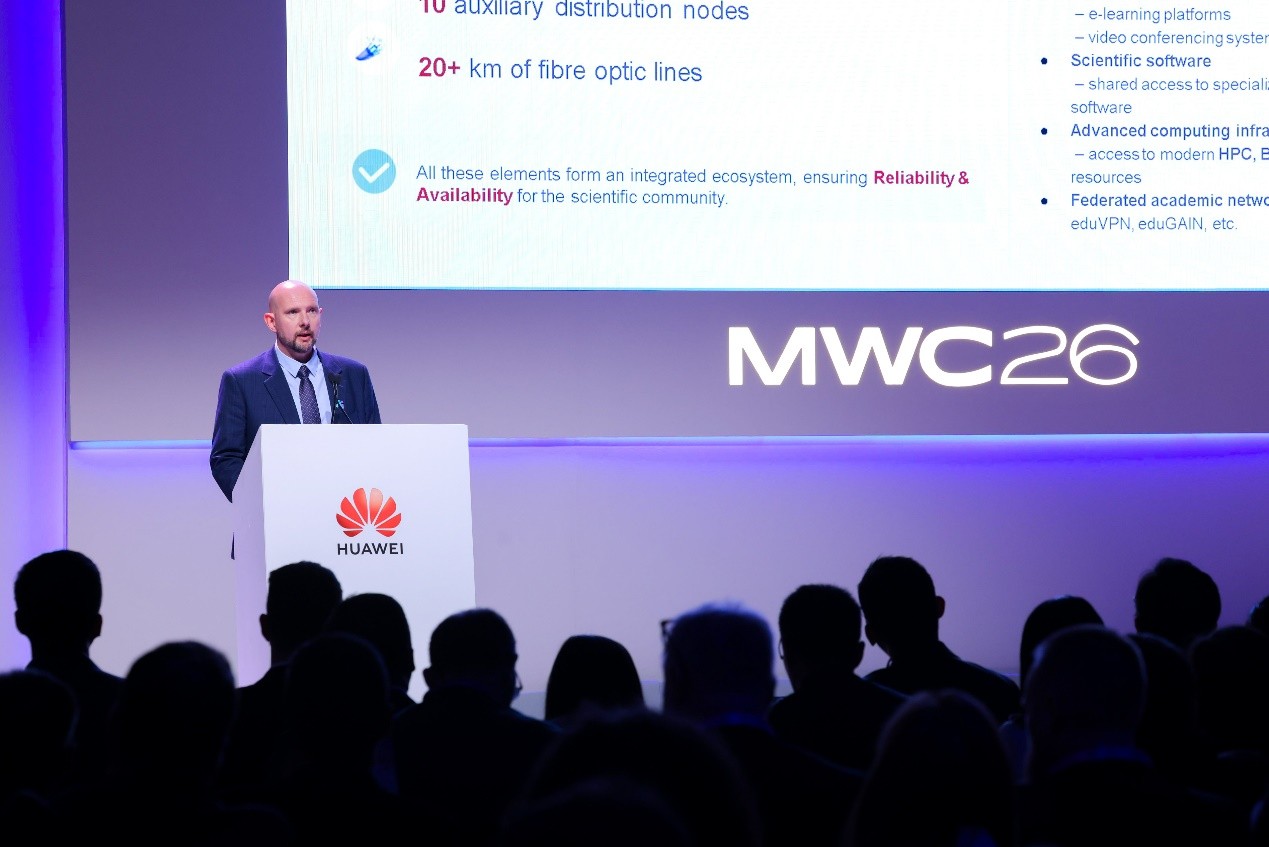
Marcin Woźniak, sharing his success story
Marcin Woźniak, Deputy Director of CzestMAN, and Tomasz Chmiel, Chief IT Specialist of CzestMAN, shared their success story in digital innovation. The university leveraged Huawei's all-flash storage to support scientific research, significantly improving research efficiency, learning and teaching experience, and management effectiveness.
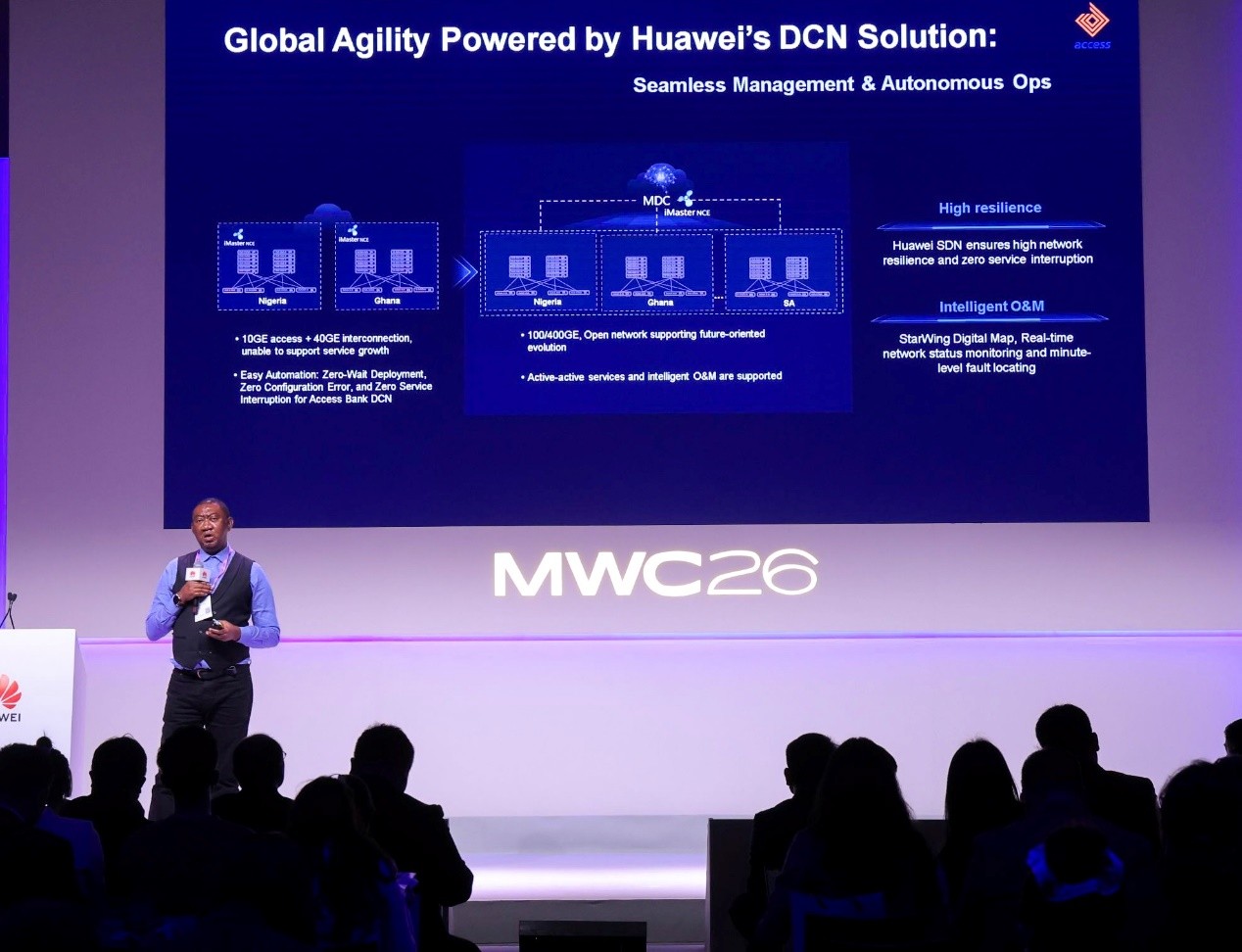
Emmanuel Morka, speaking at the Session
Emmanuel Morka, Regional CIO of West Africa, Access Bank, shared the digital practices of Access Bank. He elaborated on how the group streamlined its complex DCN architecture—a result of large-scale mergers and acquisitions over the past six years—by deploying Huawei's Xinghe AI Ultra-Resilient Fabric Solution. The group has since established a resilient DCN infrastructure with intelligent O&M to support its FinTech transformation.
With AI rapidly advancing, Huawei will continue to focus on technological innovation and work with global customers partners to lay a solid foundation for AI computing. The vision is to turn every bit of computing power into intelligent productivity.
Copyright © 2026 Huawei Technologies Co., Ltd. Tüm Hakları Saklıdır.