Enterprise products, solutions & services
Huawei participated for the first time in Enlit Europe 2025 in Bilbao, Spain, the continent’s largest gathering for the energy sector. The company showcased digital solutions and products designed to drive the transformation of European electric power industry.
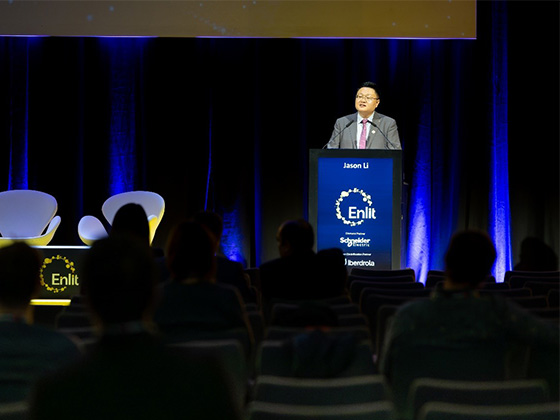
In his keynote speech Jason Li, President of Global Marketing & Solutions, Electric Power Digitalization BU at Huawei, outlined how the rapid growth of renewables and electrification necessitates new approaches to grid management. He emphasized that traditional automation alone cannot solve today’s complexity but modern grids require deeply integrated digital technologies and AI optimisation to deliver ultimate stability and flexibility.
“The integration of automation, digitalization, and AI will be the decisive driver for grid modernization. Only highly flexible and stable systems can meet the demands of the energy transition and the rapid integration of new energy sources,” said Li.
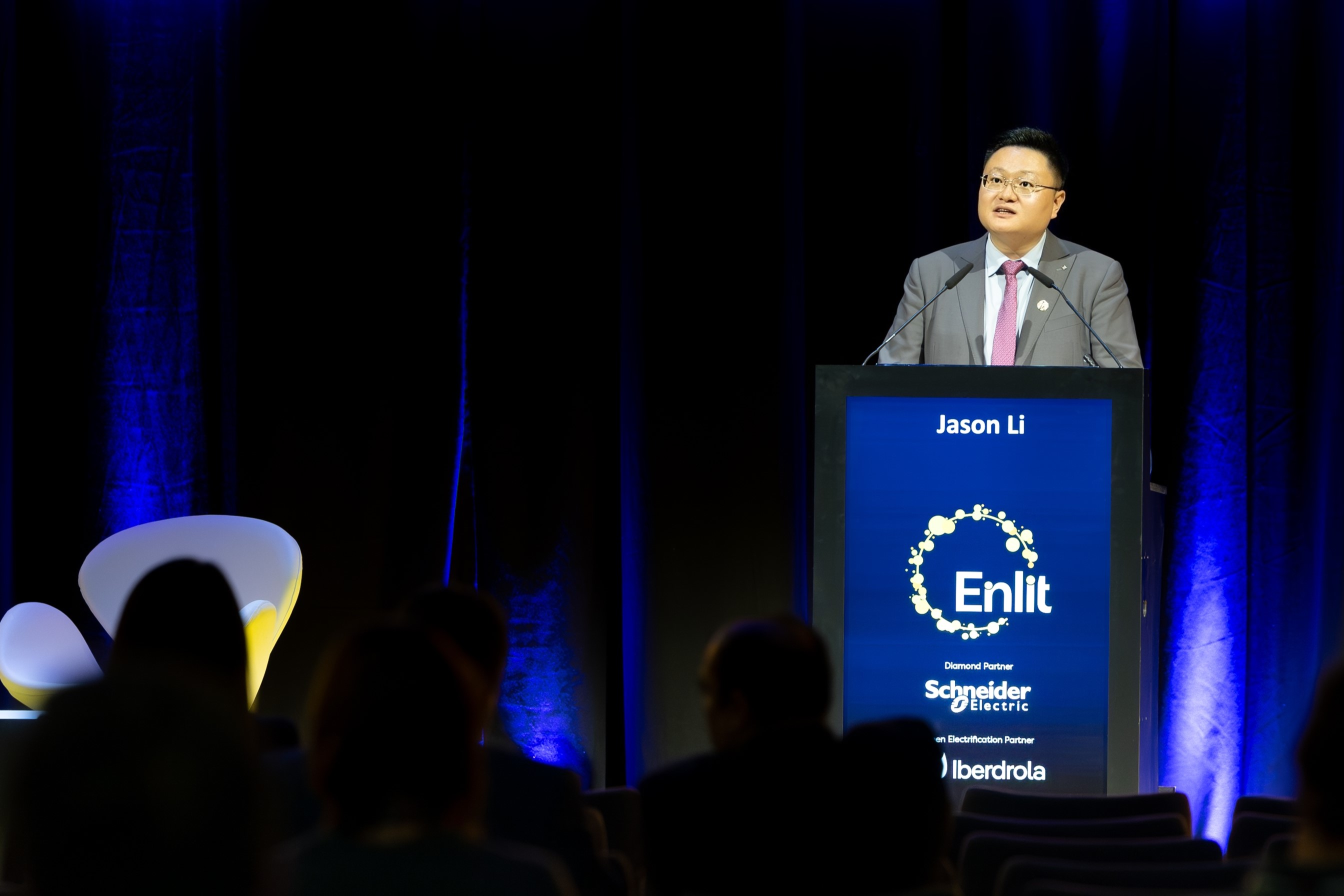
Jason Li, President of Global Marketing & Solutions, Electric Power Digitalization BU, Huawei; Bilbao, Spain, November 2025
The rapid rise of renewables, shifting weather patterns, decarbonization targets, and evolving policy frameworks all intensify the strain on networks. Utilities must address unpredictable energy flows, new loads such as EVs, and the need for ultimate flexibility and stability—challenges that already shape the industry in China and other regions.
Huawei responds with intelligent technologies—combining automation, digitalization, and AI-led solutions—to enhance stability, transparency, and operational agility.
At Enlit Europe 2025, Huawei presented a suite of products designed for transparency, reliability, and integration of distributed energy resources. These solutions empower utilities to manage complexity and drive the energy transition:
As Europe’s power sector bets big on renewable energy sources, there is an increasing demand for flexibility, and the need for real-time transparency. This puts pressure on utilities to modernize networks to manage new energy sources and changing consumption patterns.
Addressing these challenges in his speech Max Ma, VP Electric Power Digitalization BU, Huawei, highlighted how intelligent distribution networks increase transparency and efficiency, supporting the transition to sustainable energy. He pointed to a unified HPLC technology to manage all LV grid components and proactive grid management as key enablers.
Nigel Hawkins, Senior Consultant for Standardization and Industry Development at Huawei, discussed capacity balancing and underscored the importance of agile digital communication platforms for grid stability as renewables expand. He emphasized the role of smart grids and robust telecoms in enabling reliable operations.
The energy transition brings unprecedented challenges, but also opportunities for decisive action. The intersection of automation, digital technologies, and AI enablement is not just an option—it is essential for future-ready power networks. Huawei’s solutions, proven in large-scale deployments, show that modernization is achievable today.
“The industry must move from passive response to proactive service, leveraging digital tools, AI-led solutions and collaboration to build grids that are resilient, flexible, and ready for the future”, concluded Li.
For more information, visit https://e.huawei.com/en/industries/grid
Copyright © 2026 Huawei Technologies Co., Ltd. All rights reserved.