This site uses cookies. By continuing to browse the site you are agreeing to our use of cookies. Read our privacy policy>

This site uses cookies. By continuing to browse the site you are agreeing to our use of cookies. Read our privacy policy>
Enterprise products, solutions & services
[Luanda, Angola, June 2, 2026] On May 29, Huawei and Angola's Ministry of Energy and Water (MINEA) released the White Paper on Digitalization and Green Energy Transition of Angola's Electric Power Industry during the 2nd International Conference on Energy and Water (2ª Conferência Internacional sobre Energia e Águas). This initiative supports Angola's broader push for economic diversification and energy transition. Guided by the "more bits, less watts" strategy, the white paper aims to accelerate digital and green transformation across Angola's power sector and the wider Southern African region.
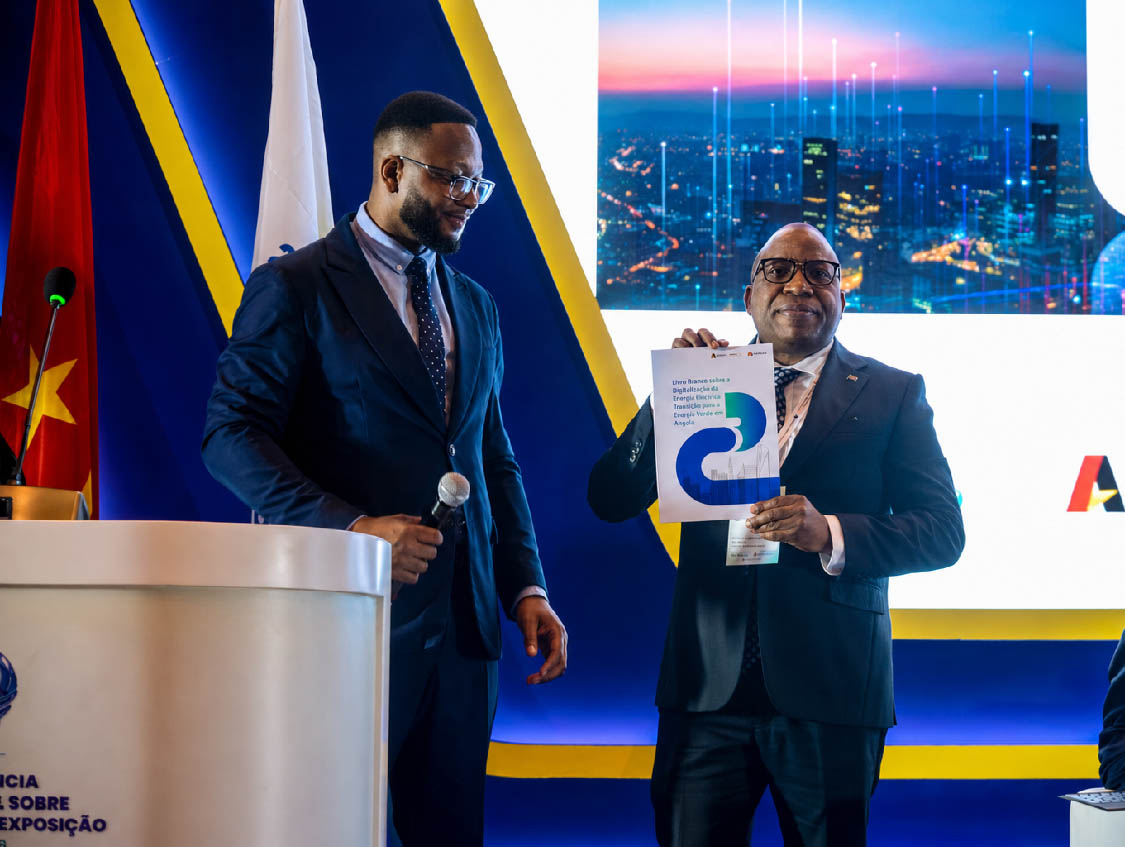
Releasing the White Paper on Digitalization and Green Energy Transition of Angola's Electric Power Industry
Arlindo Carlos, Angola's Secretary of State for Energy and Water, attended the release and delivered a speech. He noted that Angola is rich in clean energy resources, positioning the country well to drive regional energy integration and green transformation. As the backbone of national economic development, power grids are moving toward more intelligent, more reliable, and greener systems. However, traditional operational models face mounting challenges, including fragmented grid infrastructure, severe line losses, and heavy reliance on imported fuels.
According to the Secretary, Angola will prioritize digital and intelligent transformation in building its future power system. With the advancement of next-generation digital power technologies, the integration of four key technology clusters—digital technologies (bit), power electronics (watt), thermal management (heat), and energy storage management (battery)—along with the "more bits, less watts" strategy, will serve as the cornerstone of this transformation. Looking ahead, with advanced solutions such as grid-forming energy storage systems, intelligent distribution systems, and all-optical communication networks, Angola's power grid will evolve from traditional, extensive infrastructure into a modern, reliable, and intelligent system.
As a leading global provider of ICT infrastructure and smart devices, Huawei lays out an integrated energy transition solution in the white paper, covering power generation, transmission and distribution, consumption, O&M management, digital governance, and cross-border trade. Built on Huawei's end-to-end strengths in equipment, networks, cloud platforms, and AI algorithms, the solution offers a practical roadmap to accelerate the evolution of Angola's power grid. This initiative integrates power and ICTs to drive a comprehensive upgrade while supporting Angola's "Angola Energy 2050" strategy and its goal of building a future-ready energy system. Huawei is committed to helping Angola unlock its high-quality clean energy resources as it shifts from a fossil fuel–importing country to a clean energy hub and electricity exporter in Southern Africa. This will lay a solid foundation for the country to build a clean, efficient, and intelligent sustainable energy future.
The success of Angola's digital blueprint depends on both advanced technologies and a robust local ecosystem. Huawei will work closely with the Angolan government, power customers, and ecosystem partners to drive a series of benchmark projects. These include advanced power communication networks, intelligent transmission line inspection, intelligent distribution systems, nationwide ultra-fast EV charging networks, off-grid PV and energy storage microgrids for remote areas, and intelligent microgrids for large-scale mines.
At the same time, Huawei will stay rooted in Angola. With the new tech campus and regional R&D and innovation center in Luanda, inaugurated by the President of Angola, Huawei will provide systematic ICT, AI, and cloud computing training to over 15,000 young Angolans by 2027. Huawei is not only committed to delivering cutting-edge technologies but also to bridging the digital divide by jointly building a local, self-sustaining digital talent pool. This shared effort will secure the sustainable operations and long-term evolution of the national digital blueprint in the energy sector, paving the way for a new power system built on secure connectivity, lean operations, clean and efficient performance, and open collaboration.
Copyright © 2026 Huawei Technologies Co., Ltd. All rights reserved.