
Powering Urban Rail with an "Optical Engine"—F5G Steers Ningbo Metro into the Era of Smart Mobility
Enterprise products, solutions & services

On June 30, 2025, Phase I of Ningbo Metro Line 8 officially opened, extending the city's metro network to over 222 kilometers. This new transit artery links the southeast and northwest of the city and, as the flagship project of the Ningbo Urban Rail Transit Phase III Construction Plan, sets a new benchmark for smart urban rail.
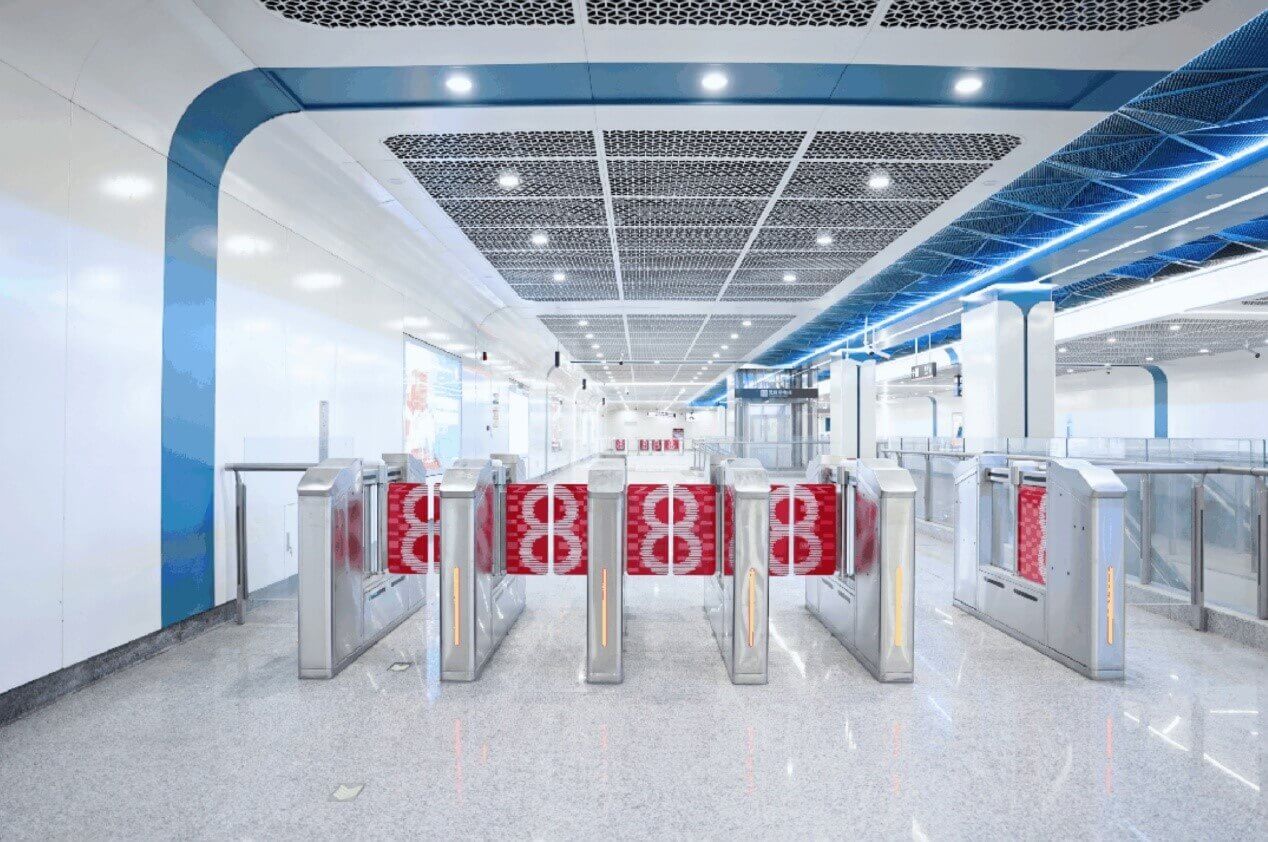
Passengers on Line 8 can now enjoy a journey where culture meets innovation. At Zemin Station, staff wear uniforms that blend the timeless grace of the Chinese qipao with smart Western business wear. Southern Business District Station displays intricate openwork designs inspired by traditional garment-making, featuring motifs of auspicious clouds and the moon. Together, these stations celebrate the rich heritage of Hongbang tailoring, turning the metro into a dynamic cultural gallery.
Alongside these cultural elements are smart features that enhance the ride: self-service customer centers at every station, AI-driven lighting that predicts passenger flow and adjusts brightness automatically, and an intelligent environmental control system that keeps conditions comfortable year-round.
Beneath the artistry and passenger-facing innovations lies the foundation of the line's vibrancy: a robust, stable, and intelligent digital backbone—the next-generation transmission network. Serving as Line 8's "central nervous system," it ensures seamless operation across every function.
Ningbo Metro Line 8 operates at GoA4—the highest Grade of Automation worldwide—supporting more than 100 fully automated functions. Trains can start, reverse, return to the depot, and pass through wash systems without human intervention. The integrated train control room acts as the station's "brain," consolidating multiple data dashboards, automated station startup and shutdown, multi-scenario linkage, and more functions in a single space to enable efficient operations and rapid emergency response.
Such advanced automation demands a communication network with:
Ultra-high bandwidth for a large number of services: Dozens of systems run in parallel, including closed-circuit television (CCTV), passenger information system (PIS), and automated fare collection (AFC). They generate massive data flows—such as high-definition advertising videos—requiring a multi-service, ultra-high bandwidth network.
Uncompromised reliability for ironclad security: In a GoA4 system, even minimal network delays can threaten safety. Secure, fail-safe communication channels are essential for critical services such as dispatching and power supply monitoring.
Intelligent, simplified systems for efficient O&M: With 19 stations, extensive equipment, and complex service systems, Line 8 faces significant O&M challenges. Its main requirements are visualized network status management, rapid fault locating, and intelligent O&M.
Recognizing that a reliable network is vital for both safe train operations and intelligent urban rail services, Ningbo Metro Line 8 chose Huawei's F5G urban rail all optical network solution to build its line transmission network system—the core of its communications infrastructure. This integrated fiber broadband network carries all service information, such as voice, text, data, and image transmission.
One of the key advantages of the solution is its "hard pipe" technology. This technology achieves physical isolation at multiple levels through dedicated wavelengths and timeslots, assigning specific channels to each service. Whether transmitting passenger information, real-time train updates, or vital security and scheduling data for the integrated monitoring system, each service travels in its own hard pipe with zero crosstalk. This eliminates congestion and interference at the physical layer, while one-hop optical-layer transmission ensures top performance for core services.
For example, ring network protection based on MPLS-TP can perform switchover within 50 ms in the event of a link or node fault, preventing service interruptions. Combined with 1+1 hot standby for key device components, the system achieves 99.999% availability to ensure the stable operation of Line 8.
The solution also complements the centralized security screening system, revolutionizing security checks at the stations. Unlike traditional, localized manual checks that require heavy staffing and struggle during peak hours, Huawei's urban rail all optical network solution transmits scanner data directly to the cloud via colored light with deterministic latency under 1 ms. This enables real-time, centralized, AI-powered screening, improving accuracy and efficiency while freeing staff for more meaningful tasks.
To help Ningbo Metro Line 8 handle massive amounts of data, Huawei's urban rail all optical network solution constructs an ultra-large bandwidth network that supports smooth evolution. The solution uses Huawei's E6600 series of MS-OTN devices, which support access rates of 2Mbit/s to 100Gbit/s, with up to 2.8T OTN capacity per subrack, 200G per slot, 400G per wavelength, 96 DWDM wavelengths, and 19.2T per fiber.
The solution also employs converged networking that integrates gray light and colored light. Using a same set of device and fiber pair, it allows smooth bandwidth upgrades—from 100G to 200G and then 300G. O&M staff can simply add or replace line boards while services remain uninterrupted. This scalability ensures Ningbo Urban Rail Transit Phase III stays ahead with its network infrastructure.
To address O&M challenges, Ningbo Metro Line 8 deploys Huawei's iMaster NCE autonomous network management and control system as its "smart brain." It delivers three transformative benefits:
Network visualization: A unified management interface sums up the network status and visualizes it in multi-dimensional views and reports, replacing manual inspections with intelligent monitoring.
Automated service provisioning: End-to-end private line services are provisioned in seconds. Bandwidth can be scaled up based on service requirements and multiple Service Level Agreement (SLA) levels can be specified. Network latency is visualized and can be managed, with path selection supported.
Intelligent proactive O&M: The AI-powered system simulates network faults to assess service robustness and identify network bottlenecks in advance. It ensures reliable performance for critical services and applies model mapping for significant events, enabling proactive O&M and faster issue resolution.
The application of Huawei's F5G urban rail all optical network brings Ningbo Metro Line 8's smart rail vision to life.
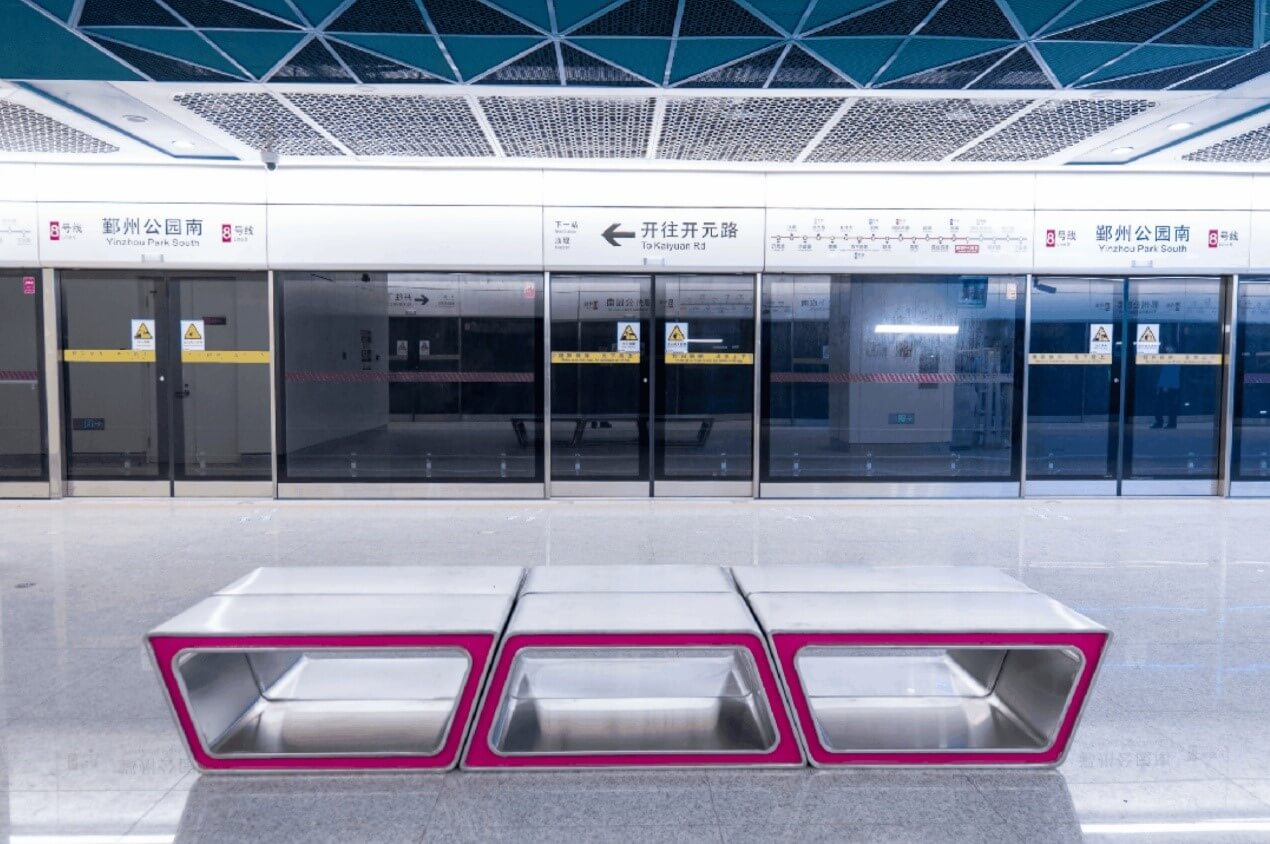
From self-service customer centers and efficient fare collection to clear arrival announcements and videos on the platform screen, every passenger-facing service runs on this dependable communications backbone. Its high security and bandwidth bring the benefits of advanced technology to every journey.
The zero-crosstalk, highly reliable network safeguards metro operations, while intelligent O&M frees staff from repetitive manual tasks, improving station management efficiency and reducing costs.
As Ningbo Rail Transit's Phase III blueprint unfolds—with Lines 7 and 6 set to open soon—Ningbo Metro and Huawei will continue to integrate cutting-edge all-optical technologies into the city's transport arteries, infusing intelligence into urban rail and propelling this vibrant port city into a new era of smart Mobility.
Copyright © 2026 Huawei Technologies Co., Ltd. All rights reserved.

