


About the OlympusMons Award
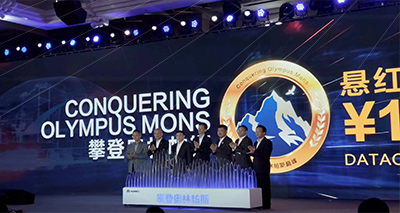 Huawei set up the OlympusMons Award in 2019 to reward solutions to data infrastructure challenges
In the intelligent era, data has become a vital resource. Huawei is committed to utilizing data to build end-to-end capabilities, covering computing, storage, utilization, and AI. With these capabilities, Huawei can meet the growing requirements of various industries, maximize the value of each bit of data, and minimize the cost per bit of data across the entire lifecycle.
Building an ecosystem for the entire tech industry requires the collaboration of all parties. This is particularly true when it comes to infrastructure breakthroughs. In 2019, Huawei set up the OlympusMons Award, which rewards effective solutions to two major challenges in the data industry: how to achieve self-driven full-lifecycle data management, and create data storage with superb cost-performance.
We hope to cooperate with academics across the globe to achieve breakthroughs in technical foundations such as cross-region distributed operating systems, AI governance based on thousands of nodes, heterogeneous computing capability powered by thousands of cores, new storage media, and brain-like intelligent data reduction.
-
 Challenge 1
Achieving the self-driven full-lifecycle data management
Implement the cross-data source storage engine, multi-data-center collaboration and intelligent data full-lifecycle governance with trustworthy by developing technologies such as scheduling of thousands of nodes for efficient data analysis, cross-Availability Zone disaster recovery for high-reliability and availability, federated collaboration with heterogeneous systems, distributed intelligent data index and search, intelligent copy data management etc. Help the enterprise users to discover data more efficiently and understand data more deeply, to converge and process data across a wide range of sources, engines, and regions, and eventually achieve the self-driven full-lifecycle data management.
-
 Challenge 2
Creating data storage with superb cost-performance
Revolutionize the storage hardware system by developing technologies such as a single device powered with thousands of heterogeneous cores, intelligent network, storage and computing convergence, PIM/PNM, and high-performance storage media with large capacity. Help the enterprise users to eliminate barriers between computing and storage, build a primary storage system featuring memory-level performance at an HDD-level cost and a secondary storage system featuring SSD-level performance at a tape-level cost, and eventually create the data storage with superb cost-performance.
OlympusMons Awarding Results
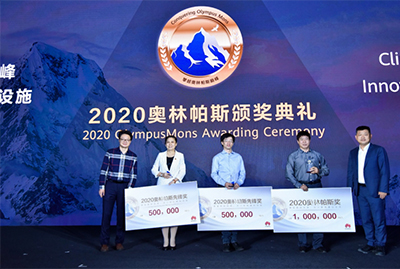 2020 OlympusMons Awarding Ceremony
During HUAWEI CONNECT 2020, the OlympusMons award winners are officially unveiled at the 2020 OlympusMons Awarding Ceremony. The team of teacher Shu Jiwu from Tsinghua University won the OlympusMons Award and one million bonuses. The team of teacher Chen Rong from Shanghai Jiaotong University and the team of teacher Feng Dan from Huazhong University of Science and Technology won the OlympusMons Pioneer Award.
Based on the criteria of "innovative, Outstanding, Generalized, and Implementable", the assessment committee conducted scientific and rigorous analysis and evaluation on 25 subjects from five countries, and finally reached the overall ranking. Shu Jiwu, who ranks No.1, claimed that the topic "Persistent Memory Storage System Construction and Key Technologies" met the award requirements of Challenge 2 (Economical data storage per bit) from four criteria dimensions and won the award of Challenge 2. Challenge 1 (Self-driving data lifecycle governance): No outstanding application topic is available, so the prize for Challenge 1 is vacant.
-
Award vacancy
Challenge 1
Self-driving data lifecycle governance
-
OlympusMons Award
Challenge 2
Economical data storage per bit
-
OlympusMons Pioneer Award
Reward the achievements with outstanding performance in terms of innovation and advancement.
Awards Introduction

OlympusMons Award
Research Bonus: 1,000,000 RMB-
- Achievements:
- Persistent Memory Storage System Construction and Key Technologies
-
- Major team members:
- Shu Jiwu, Lu Youyou, Chen Youmin, Wang Qing, Zhu Bohong from Tsinghua University
-
-
 Shu Jiwu
 Lu Youyou
 Chen Youmin
 Wang Qing
 Zhu Bohong
-
- Achievement introduction:
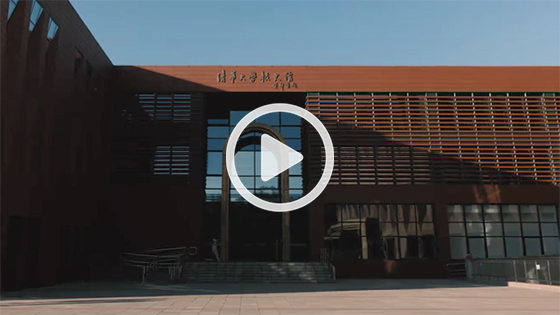 This new storage system is centered on persistent memory. Keeping the design idea of separation of computing from memory and function abstraction in mind, this team innovatively proposed the design methods of persistent memory file systems and key-value storage, as well as the distributed persistent shared memory framework. They overcame a series of difficulties in data structure, memory management, consistency, and security, and constructed a new distributed persistent memory storage system TH-DPMS. This system provides unified interfaces to flexibly and efficiently support memory, objects, transactions, and replication, and has obvious advantages in tail latency and high bandwidth. It provides efficient data storage based on new memory media, achieving economical data storage per bit.
OlympusMons Pioneer Award
Research Bonus: 500,000 RMB-
- Achievements:
- Efficient Data Processing System based on New Heterogeneous Hardware
-
- Major team members:
- Chen Rong, Wang Zhaoguo, Zang Binyu, Wei Xingda, Dong Mingkai from Shanghai Jiao Tong University
-
-
 Chen Rong
 Wang Zhaoguo
 Zang Binyu
 Wei Xingda
 Dong Mingkai
-
- Achievement introduction:
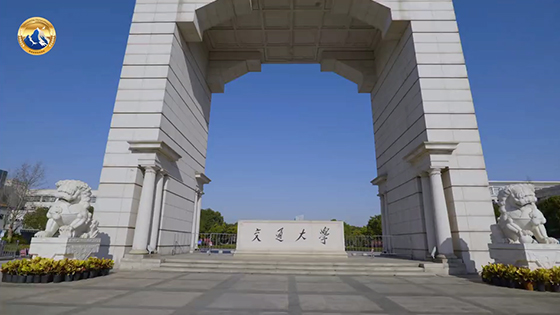 This cost-effective distributed memory computing system stack is based on diversified heterogeneous hardware and new media. This team innovatively proposed a distributed heterogeneous hardware aggregation method powered by RDMA. Through system-level hierarchical decoupling, this method overcomes the functional and performance limitations of single hardware, extends hardware application scenarios, and improves system cost-effectiveness. Based on this, the team constructed the distributed memory computing system stack. As a result, small-sized, low-cost hardware improves performance metrics such as system concurrency, throughput, and latency by several orders of magnitude. Reshaping system-level architecture maximizes data value on diversified hardware, extends data application scenarios such as online transactions, real-time risk control, intelligent recommendations, and knowledge graphs, and builds a unified data processing engine for economical data storage per bit.
OlympusMons Pioneer Award
Research Bonus: 500,000 RMB-
- Achievements:
- Efficient and reliable NVM technology
-
- Major team members:
- Feng Dan, Tong Wei, Chen Jianxi, Wang Fang from Huazhong University of Science and Technology
-
-
 Feng Dan
 Tong Wei
 Chen Jianxi
 Wang Fang
-
- Achievement introduction:
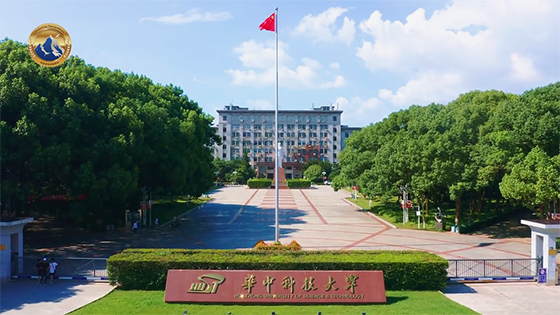 New non-volatile memory (Non-Volatile Memory, NVM) has advantages such as large capacity, low power consumption, non-volatile, and high performance, providing an effective way for storage-level memory, storage-computing integration, and the like. Based on NVM high performance, the micro-architecture is atomic innovation, and the first two-dimensional mode-aware delay setting method based on media features is developed to reduce operation latency more effectively. This method is promoted to 3D stacked arrays. On the premise of ensuring high performance, the proposed NVM reliability method greatly prolongs the service life of the NVM. The achievements include media units, controllers, and storage systems. They provide innovative technologies for high performance, high reliability, long life, and security, and provide software-hardware synergy for NVM-based cost-effective data storage. The achievements are highly innovative and advanced in the storage field.


Thanks to all the teams who participated the OlympusMons!
As we move towards the intelligent era, we must cross the data peak. OlympusMons represents Huawei Storage's unremitting pursuit and exploration
on the road to data peaks. The integration of industry, education, and research opens the door for innovation in data infrastructure.